Choosing the right nylon fabric can have a big impact on your next collection. In this guide, we’ll explain the main types of nylon, how to read a test report, and what to look for when choosing a reliable fabric supplier.
We’ll share real breaking strength, tear strength, and colorfastness data from our own lab reports, not just general industry data. A “70D nylon” label alone doesn’t tell you everything. Fabrics with the same denier can perform very differently in production. Let’s get into it.
What Is Nylon Fabric, and Why Does It Dominate Outdoor Gear?
Nylon is a synthetic fiber made from petroleum-based materials, first developed by DuPont in the 1930s. It quickly moved from stockings to parachutes, and today it’s widely used in outerwear, backpacks, tents, and sportswear.
Its popularity in outdoor and functional products comes down to three things: strong performance at a low weight, good abrasion resistance, and the ability to take coatings and laminations well. That’s why you’ll find it in everything from ultralight hiking jackets to heavy-duty duffel bags.
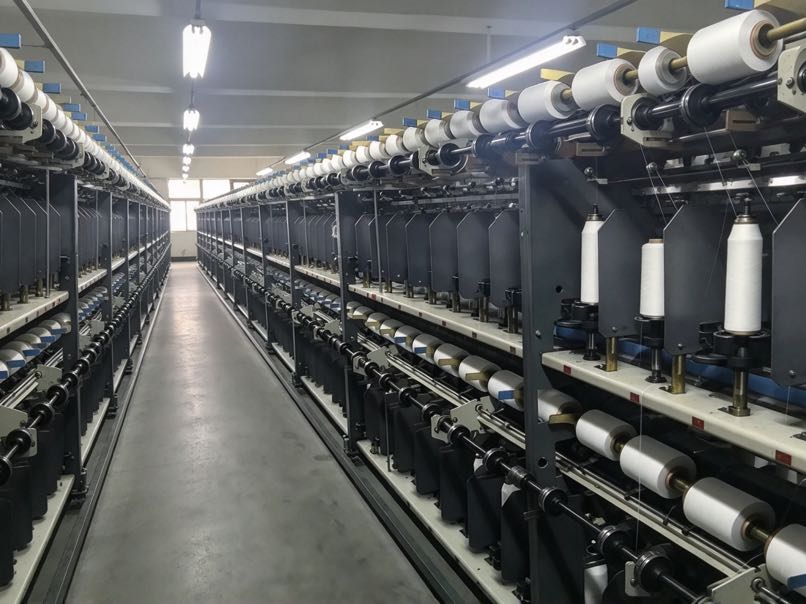
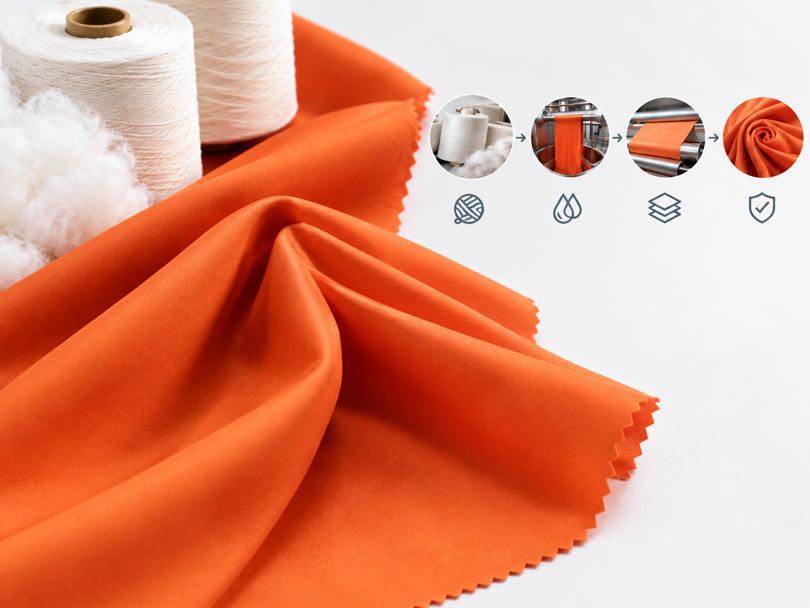
How Nylon Fabric Is Made
The short version: Petroleum-based raw materials are made into nylon chips, melted, and spun into yarn. The yarn is then stretched for strength, woven or knitted into greige fabric, and finally dyed, coated, or laminated for different uses.
Each step affects the final performance. A change in draw ratio, weave density, or finishing process can shift the strength and hand-feel of two fabrics that carry the exact same denier on the label.
Common Types of Nylon Fabric for Outdoor and Functional Gear
Nylon 6 vs. Nylon 66
Both are common in apparel fabrics. Nylon 66 generally offers slightly higher strength and heat resistance, while Nylon 6 is more common in general-purpose fabrics and takes dye well. For most outerwear and bag applications, the difference matters less than the weave, denier, and finishing.
Taslan
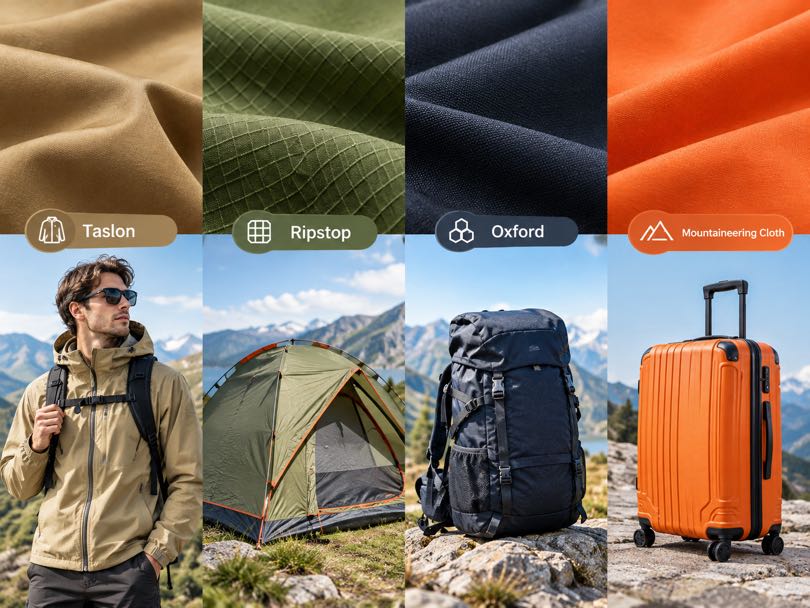
Taslan is a lightweight nylon fabric with a tight weave, a soft feel, and a slight sheen. It’s widely used for jacket shells and linings. Our 228T Taslan (70D warp × 160D weft, 110 gsm, PU-coated) is a common choice for lightweight outerwear that needs water resistance.
Ripstop
Ripstop nylon has a reinforcing grid woven into the base fabric, which helps prevent small tears from spreading. It’s widely used for tents, kites, and packable jackets where both low weight and tear resistance are important.
Oxford
Oxford nylon uses a basketweave construction for a heavier, more durable fabric, typically used in bags, backpacks, and tactical gear. Our 500D × 500D Oxford (200 gsm, 14×20 density, PU-coated with waterproofing) is a heavier-weight option for products that need to withstand daily use.
Recycled Nylon
Recycled nylon is made from recycled materials such as fishing nets and fabric scraps. It is often available with GRS certification. Its performance can be similar to virgin nylon, but pricing and lead times may vary between suppliers.
How to Read a Nylon Fabric Test Report
Test reports can be difficult to understand if you’re not familiar with the standards. Here’s what the key numbers actually tell you.
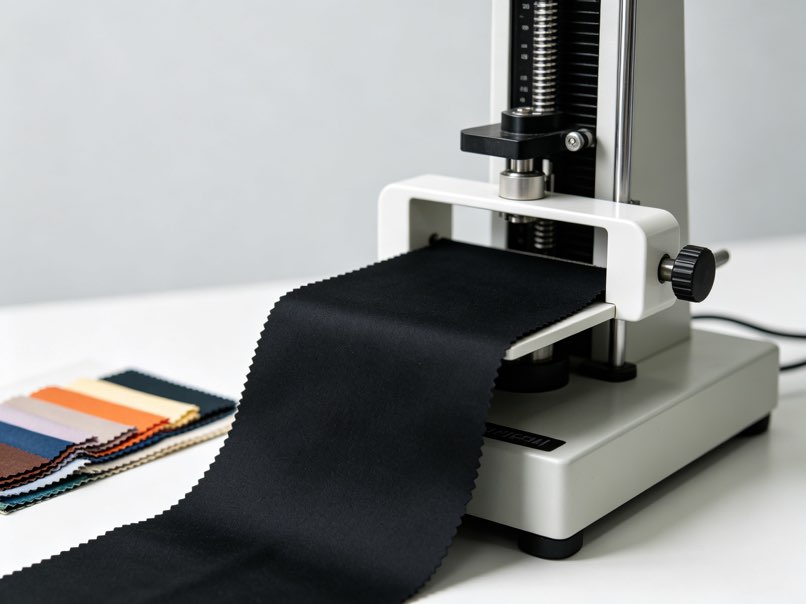
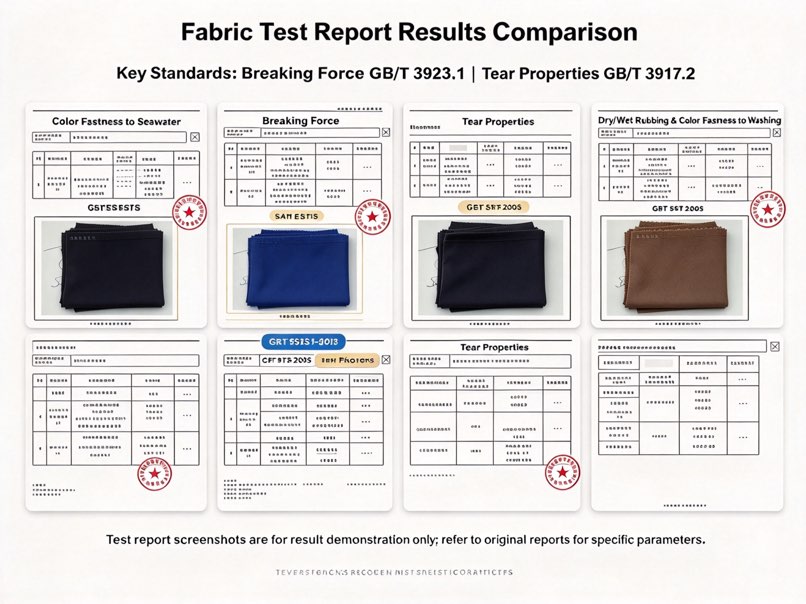
Breaking force (tested to GB/T 3923.1; see also ISO 13934-1) measures how much force a fabric can withstand before it breaks. It’s most relevant for load-bearing parts such as straps and panels.
Tear strength (tested to GB/T 3917.2) measures how well a fabric resists a tear spreading once it’s started. This matters more for tents, jackets, and anything that may be torn by branches or zippers.
Here’s how two of our fabrics compare on these tests:
Fabric | Breaking Force (Warp/Weft, N) | Tear Strength (Warp/Weft, N) | Typical Use |
Nylon Mountaineering Cloth | 910 / 1200 | 74–96 / 140 | Backpacks, luggage, heavy-duty gear |
Nylon Ripstop (sapphire blue) | 380 / 360 | 71 / 53 | Lightweight jackets, tents, packable gear |
The key point: a heavier mountaineering-grade fabric has roughly three times the tear strength of a lightweight ripstop in the weft direction.
This doesn’t mean the ripstop is weaker by design — it’s made for a different purpose.
The goal is to choose a fabric based on the stress your product will face, rather than simply choosing the highest number on the test report.
Colorfastness: A Key Point Buyers Often Overlook
Strength numbers get most of the attention, but colorfastness is just as often the reason a shipment gets rejected at final inspection.
In one of our washing colorfastness tests (GB/T 3921-2008, 40°C, 30 minutes; see also ISO 105-C06) on nylon-spandex fabric, polyamide staining was rated 3, while cotton, wool, polyester, and acetate scored 4–5. Nylon generally shows more staining under the same wash conditions.
A rating of 3 is below the 4+ level required by many brands, so this is exactly the kind of detail worth checking before you place a bulk order, not after.
Rubbing colorfastness (GB/T 3920-2008) was rated 4–5 for both dry and wet rubbing on the same fabric.
For fabrics used for coastal or water-sports products, seawater colorfastness (GB/T 5714-2019) is also worth checking. On a black nylon-spandex Taslon, our results showed a color change rating of 4 and staining ratings of 4–5 for all tested fibers. This test is especially relevant for products such as swimwear, life vests, and beachwear accessories.
Matching Nylon Fabric to Your End Product
Use this as a starting point when discussing your fabric requirements with a supplier:
Product Type | Suggested Fabric | Denier / GSM Range | Key Finish |
Lightweight jackets, windbreakers | Taslon | 70D, ~110gsm | PU coating, DWR |
Tents, packable gear | Ripstop | 40D–70D, 80–120gsm | PU/silicone coating |
Backpacks, daily-use bags | Oxford | 500D+, 180–220gsm | PU coating, waterproofing |
Heavy-duty luggage, mountaineering gear | Mountaineering cloth | 300D+, 150gsm+ | PU/TPU coating |
If you’re not sure where your product falls, send us the intended use case and we can recommend a starting spec.
Working With a Nylon Fabric Supplier: What to Ask For
Before you commit to a supplier, it’s worth asking for:
- Third-party test reports for breaking force, tear strength, and colorfastness — not just a spec sheet
- Sample yardage before placing a bulk order
- Clear MOQ and lead time for both sampling and production
- Confirmation of which coating or lamination process is used, since this affects both feel and durability
A supplier who can hand over real test data, rather than generic marketing claims, is usually a good sign of how they’ll handle the rest of the order.
FAQ
What is the difference between Taslan, ripstop, and Oxford nylon?
They mainly differ in weave and end use. Taslan is lightweight, smooth, and commonly used for jacket shells and linings. Ripstop has a reinforced grid that helps limit tearing. Oxford uses a heavier basket weave for bags, backpacks, and tactical gear.
Is nylon fabric waterproof?
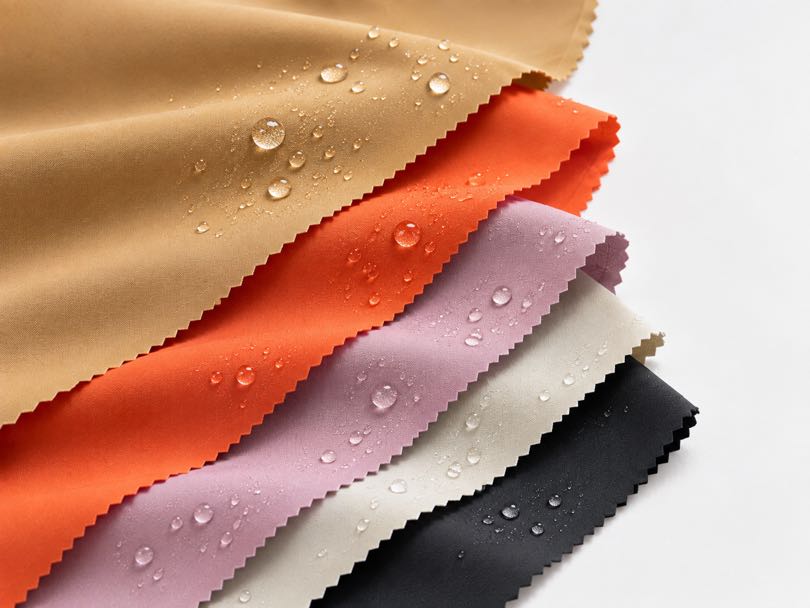
Nylon is naturally water-resistant, but not fully waterproof. Waterproof performance usually comes from PU coating, DWR treatment, or lamination. For example, 228T Taslan and 500D Oxford can be PU-coated. Always confirm the finishing process, as it affects both hand feel and durability.
Why does nylon score lower on colorfastness staining, and what should I ask for?
Nylon tends to show more staining under the same dye and wash conditions. In one nylon-spandex wash test, nylon scored 3, while other fibers scored 4–5. Many brands require 4+, so ask for washing, rubbing, and seawater colorfastness results before bulk production.
Is recycled nylon as good as virgin nylon, and how do I verify GRS?
Recycled nylon can perform similarly to virgin nylon, though cost and lead time may vary. To verify GRS, check the supplier’s valid certificate and product scope. GRS can apply from 20% recycled content for B2B use, while 50% is required for consumer-facing GRS claims.
Can I get samples and test reports before ordering in bulk?
Yes. Color swatches usually take 4–5 days, and small-lot dyed samples take about 10–15 days for regular fabrics. We can share existing reports or arrange third-party testing for specific standards. Contact us with your product type and we’ll recommend a starting spec.
Choosing Nylon Fabric: The Short Version
Match the fabric to your end use: Taslan for lightweight shells, ripstop for tear resistance, and Oxford or mountaineering cloth for bags and heavy-duty products. Check the test data that matters most, especially breaking strength, tear resistance, and colorfastness. Don’t rely on denier alone—confirm samples and test reports before bulk ordering.
Get Samples and Test Reports for Your Product
With 18+ years of experience in fabric manufacturing, IdearTex can help you turn that list into a spec. Contact us with your intended use to request a sample of our 228T Taslan or 500D Oxford together with its test report, or a spec recommendation for your product.