Introduction
If you’re sourcing fabric for bags, tents, or pet products, you’ve probably seen “Oxford fabric” everywhere — but what does it really mean? Denier, coatings, and durability claims can be confusing.
In this guide, we’ll explain what Oxford fabric is, which specs matter when sourcing it, and what common mistakes can increase costs or shorten product life.
We’ll also share real lab-tested data from our own production line. “Durable” and “waterproof” should mean something you can verify, not just a phrase on a product page. Let’s get into it.
What Is Oxford Fabric?
Oxford fabric is a woven textile with a basket-weave structure that gives it extra strength and a slightly textured surface. Originally used for shirts as “Oxford cloth,“ it later became popular for bags, tents, uniforms, and outdoor gear.
“Oxford fabric” and “Oxford cloth” are generally the same thing. “Oxford cloth” tends to refer to lighter cotton fabrics used in shirts, while “Oxford fabric” usually describes heavier polyester or nylon fabrics used in bags and outdoor products.
Polyester vs. Nylon vs. Cotton: Which Oxford Material Do You Need?
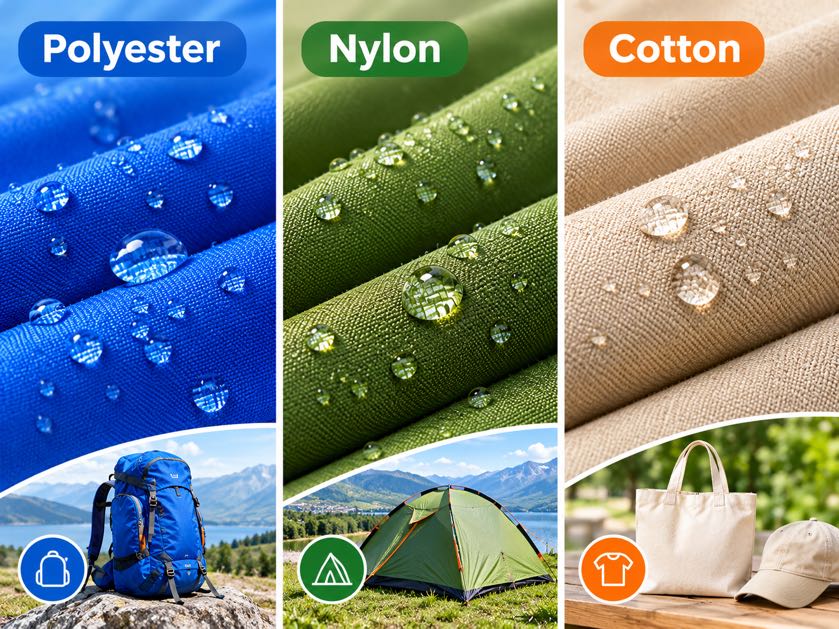
Polyester Oxford is the most common choice. It’s affordable, holds its shape well, and resists UV fading better than nylon — a practical choice for bags, covers, and general-purpose products.
Nylon Oxford costs more but offers higher abrasion resistance and tear strength, which is why it shows up in premium backpacks and heavy-duty outdoor gear.
Cotton Oxford is different from the others — it’s softer and more breathable, making it better suited to shirting and apparel than technical or outdoor products.
Key Specs to Consider When Buying
- Denier (D): This measures yarn thickness, not fabric strength. Common Oxford deniers run from 150D (lightweight) up through 1680D (heavy-duty). 600D is the most popular mid-weight option, balancing cost, weight, and toughness for bags and everyday gear.
- GSM (grams per square meter): This measures fabric weight and density. Higher GSM generally means a heavier, sturdier fabric — but weight alone doesn’t guarantee strength (we’ll explain this below).
- Weave structure: A tighter weave resists abrasion and holds coatings better, while a looser weave is lighter and more flexible.
Real Test Data
we ran full third-party lab testing on our 600D textured polyester Oxford with a PU flat coating (report numbers SH-WS 2025-001622 and SH-WS 2026-002821).
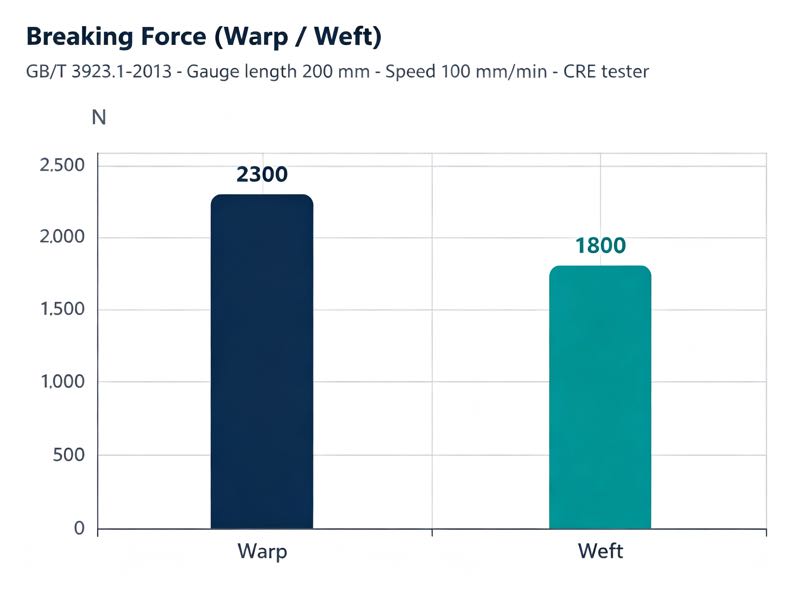
Tensile Strength: The test results showed 2,300 N in the warp direction and 1,800 N in the weft direction (GB/T 3923.1-2013) — a key measure of durability for backpacks and tents, far stronger than standard bag fabrics.
Fabric Weight: 242 g/m² (GB/T 4669-2008), with stable and consistent weight.
Color Fastness: The fabric achieved 4–5 ratings in nine of the ten color fastness test categories. See ISO 105-C06 for international laundering colorfastness testing.
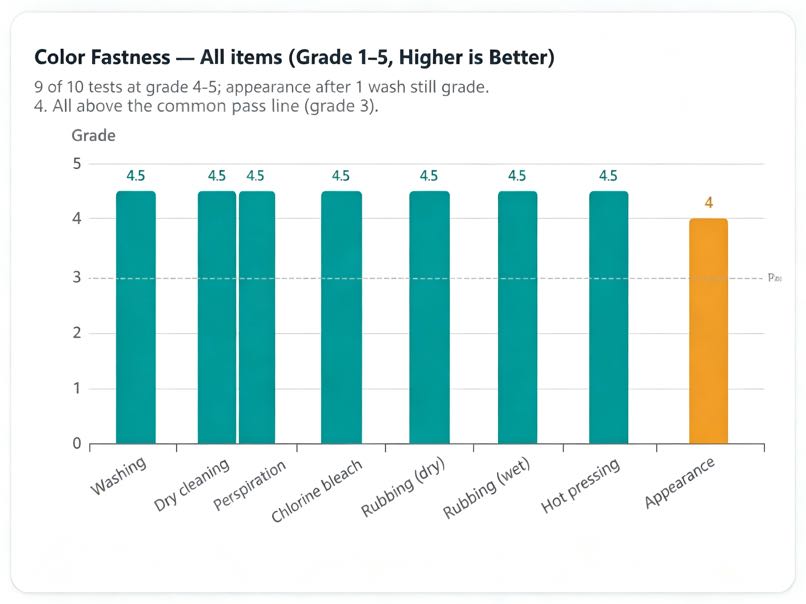
Dimensional Stability: The fabric showed only -1.2% shrinkage in the warp direction and -0.2% in the weft direction, with a Grade 4 appearance rating after one wash. This helps the fabric maintain its size and shape after washing.
Formaldehyde Content: Below the detection limit of 16 mg/kg, meeting ISO 14184-1 requirements — an important safety marker for baby strollers and pet products.
If a supplier can’t provide test data like this on request, treat their denier claim as a reference, not an absolute guarantee.
Test Item | Test Method | Result |
Mass per unit area | GB/T 4669-2008 | 242 g/m² |
Breaking force | GB/T 3923.1-2013 | Warp 2300 N / Weft 1800 N |
Smoothness appearance after repeated home laundering | GB/T 13769-2009 (5M·50°C·Flat dry) | After 1 wash: color change grade 4 |
Dimensional stability to washing | GB/T 8628/8629/8630 (4N·40°C·Line dry) | Warp -1.2% / Weft -0.2% |
Color fastness to dry cleaning | GB/T 5711-2015 | Color change 4-5; staining: Polyester 4-5, Cotton 4-5 |
Color fastness to perspiration | GB/T 3922-2013 | Acid/Alkaline color change 4-5; staining (Wool/Acrylic/Polyester/Nylon/Cotton/Acetate) all 4-5 |
Color fastness to chlorine bleach | GB/T 7069-1997 (active chlorine 2 g/L, 20±2°C, liquor ratio 50:1) | 4-5 |
Color fastness to rubbing | GB/T 3920-2008 | Dry 4-5 / Wet 4-5 |
Color fastness to hot pressing | GB/T 6152-1997 (150°C×15″) | Dry press color change 4-5; damp press color change 4-5, staining cotton 4-5; wet press color change 4-5, staining cotton 4-5 |
Color fastness to washing | GB/T 3921-2008 (Method C·60°C·30 min) | Color change 4-5; staining (Wool/Acrylic/Polyester/Nylon/Cotton/Acetate) all 4-5 |
Free and hydrolyzed formaldehyde | ISO 14184-1:2011 | N.D. Not detected (< method detection limit 16 mg/kg) |
Waterproof Oxford Fabric: Coatings Explained
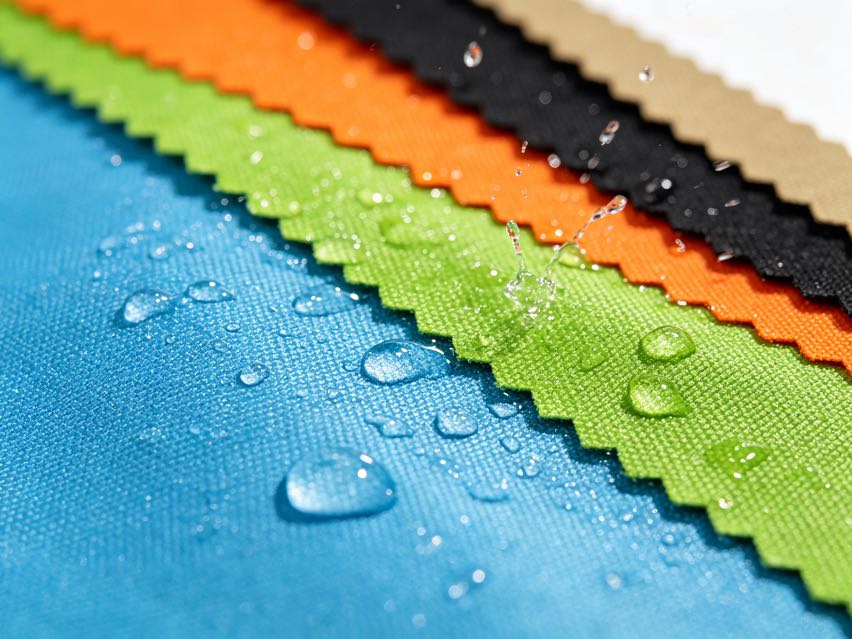
Oxford fabric is not waterproof on its own — the weave itself just resists light moisture. Waterproof performance comes from an added coating or finish. It should be verified through hydrostatic pressure testing rather than coating thickness alone.
PU (polyurethane) coating is the most common waterproofing option — breathable, cost-effective, and suitable for most bags and covers.
PVC coating is thicker and more budget-friendly, offering heavy-duty waterproofing for tarps and industrial covers, though it’s stiffer and heavier than PU.
TPU lamination is a premium film-based option that offers stronger waterproofing and better long-term durability, often used in high-end outdoor gear.
DWR (durable water repellent) finish is a lightweight surface treatment that causes water to bead and roll off — useful for light rain resistance but not full waterproofing.
For more coated and weather-resistant options, explore our Outdoor Fabric range.
Where Oxford Fabric Gets Used
Oxford fabric is used for many products, including bags and backpacks, tents and outdoor covers, workwear and uniforms, pet products, strollers, and other home or outdoor gear. The right denier, weave, and coating depend on the product and how the fabric will be used.
5 Buying Mistakes We See Most Often
- Thinking a higher denier always means a stronger fabric. Denier only measures yarn thickness — not yarn quality, weave density, or coating. A well-made 600D fabric can be stronger than a poorly made 900D fabric made with lower-quality fibers. During sampling, we often remind clients that a bigger number does not always mean better performance.
- Judging durability by GSM alone. A heavier fabric isn’t always stronger. GSM only tells you how much the fabric weighs, not how strong it is. Ask for both GSM and tensile strength, backed by test data, rather than relying on one number alone.
- Assuming a thicker coating means better waterproofing. A thicker coating does not always mean better waterproof performance. Coating formula and hydrostatic pressure also matter. Too much PU can cause cracking, make the fabric stiff in cold weather, and affect color fastness. Ask for hydrostatic pressure and cold-weather test data.
- Skipping formaldehyde and color fastness checks. These may be less important for basic tool bags, but they’re critical for baby strollers, pet products, and tents exposed to sun and moisture. Always request a traceable third-party report. For reference, our reports are numbered SH-WS 2025-001622 and SH-WS 2026-002821.
- Comparing suppliers on price per meter alone. Two rolls labeled with the same denier can differ by 20% or more in cost depending on yarn grade and coating process. The cheaper option usually cuts a corner somewhere. When a bulk order arrives, randomly check the fabric weight and tensile strength against the agreed specs.
Matching Fabric to Application: A Quick Reference
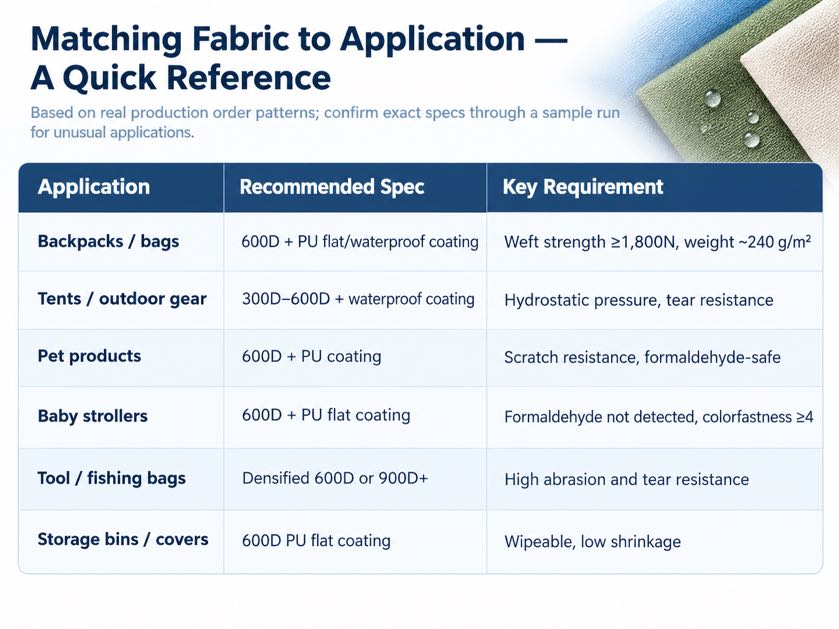
These results come from real production orders, not general averages. For special applications, it’s worth confirming the exact specs with a sample run.
Caring for Oxford Fabric Products
When possible, clean with mild soap and cool water instead of machine washing. Avoid leaving coated items in direct sunlight for long periods, as this can damage the coating and cause the color to fade. Let items dry fully before storage to prevent mildew.
FAQ
Is Oxford fabric the same as Oxford cloth?
Essentially yes — “Oxford cloth” usually refers to the lighter cotton shirting version, while “Oxford fabric” typically means the heavier polyester or nylon versions used in bags and outdoor gear.
Is Oxford fabric waterproof?
Not on its own. Waterproofing comes from an added coating (PU, PVC, or TPU) or a DWR finish, verified through hydrostatic pressure testing.
What’s the difference between Oxford fabric and canvas?
Oxford uses a basket weave and tends to be lighter and more flexible; canvas uses a plain weave and is typically heavier and stiffer.
Can Oxford fabric be machine washed?
For coated Oxford fabric, clean only the dirty areas when possible — check the coating type and colorfastness rating before machine washing.
Choosing the Right Oxford Fabric
The right Oxford fabric depends on your end use. Denier alone does not determine performance—material, GSM, weave, coating, strength, colorfastness, and waterproof performance should all be considered, then confirmed through samples and test data before bulk production.
Ready to Source the Right Oxford Fabric?
Need help choosing the right denier, GSM, material, or coating? Idear Tex can support you with fabric selection, samples, third-party test reports, and customized Oxford fabric solutions based on your performance requirements. Contact us to discuss your Oxford fabric requirements