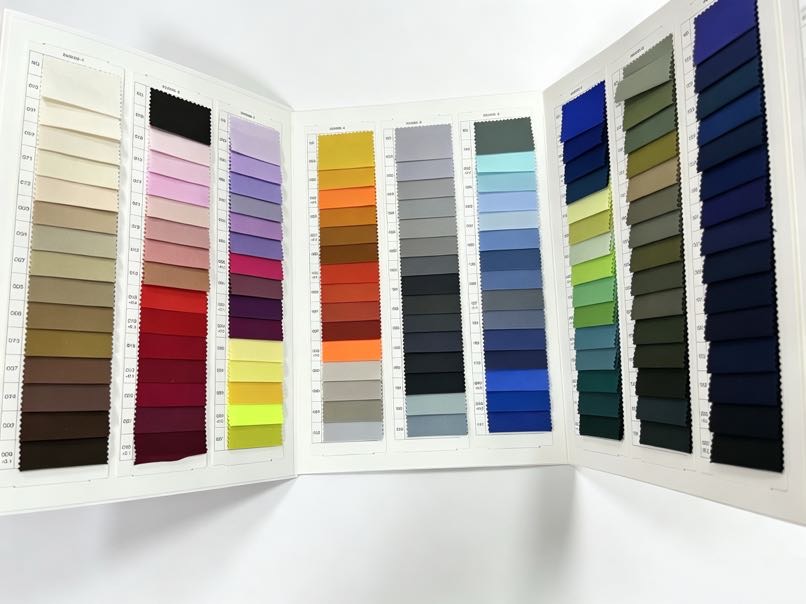
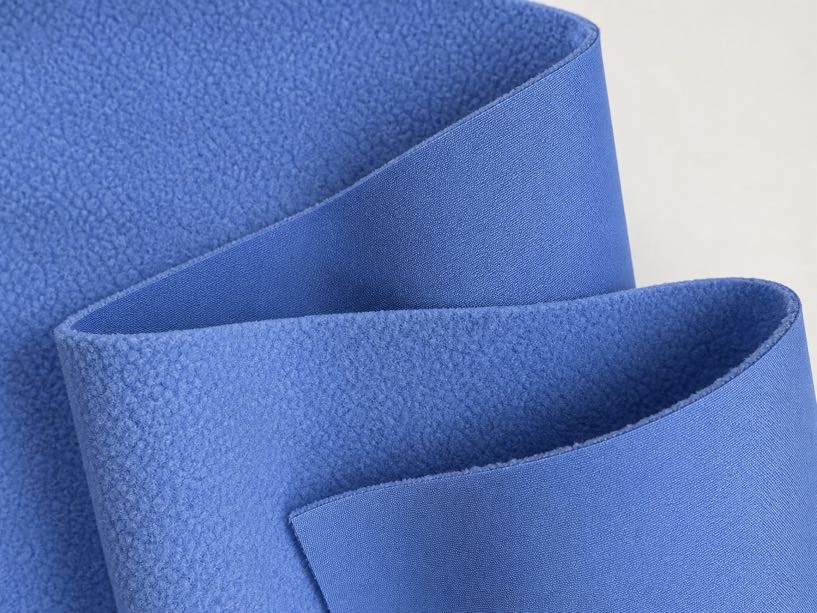
Softshell looks simple on a spec sheet, yet it is one of the easiest fabrics to get wrong in bulk. Differences in fabric construction, lamination, and finishing can affect the final quality and performance.
This guide explains how softshell fabric is made, how its layers work together, and how to evaluate its performance. It also covers common production problems, real laboratory test results, and the key specifications to check before placing a bulk order.
What Is Softshell Fabric?
Softshell is a soft, stretchy fabric designed for active outerwear. Most versions use polyester or nylon, often with a little spandex (elastane) for four-way stretch.
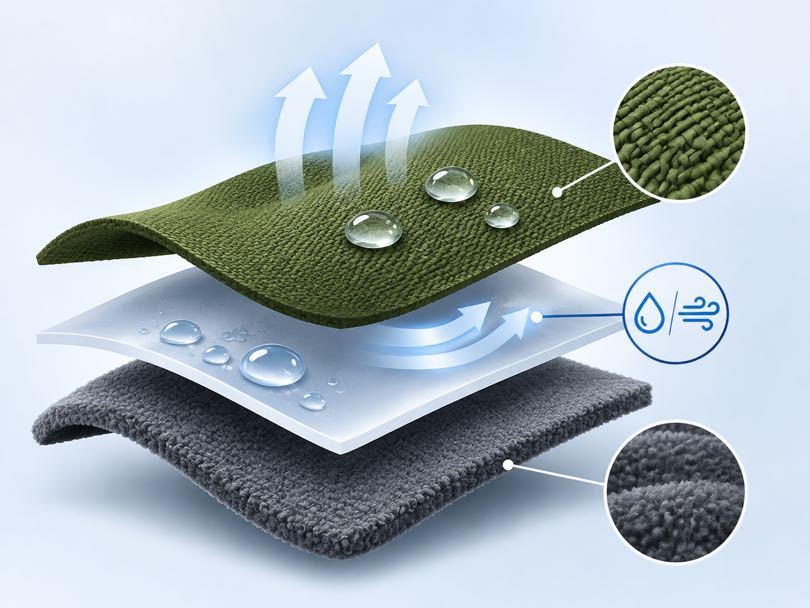
Two main types are common. A two-layer softshell combines a woven outer fabric with an inner knit or fleece layer, usually without a membrane. A three-layer softshell adds a waterproof and windproof membrane, often made of TPU, between the outer fabric and inner layer.
Many softshells also carry a durable water repellent (DWR) finish, which helps water form droplets and roll off the surface. This guide focuses on three-layer softshell fabric, where fabric construction and finishing choices have a major impact on final performance.
How Is Three-Layer Softshell Made?
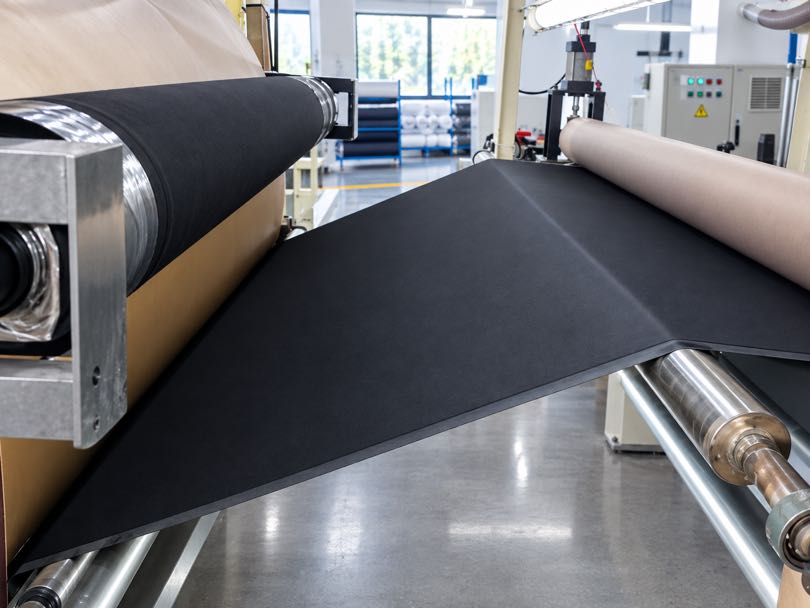
Factories bond the three layers into one fabric through lamination, using adhesive, heat and pressure. A DWR finish is usually applied afterward.
However, each layer responds differently during lamination. The polyester or nylon outer fabric must withstand the heat and adhesives used in the process. The TPU membrane can be damaged by excessive heat or unsuitable chemicals, while spandex in the inner layer may lose elasticity if exposed to too much heat.
The real challenge is to bond the layers firmly while maintaining softness, stretch, breathability and colour.
Common Lamination Problems We’ve Faced in Bulk Production
1. Bubbles After Washing
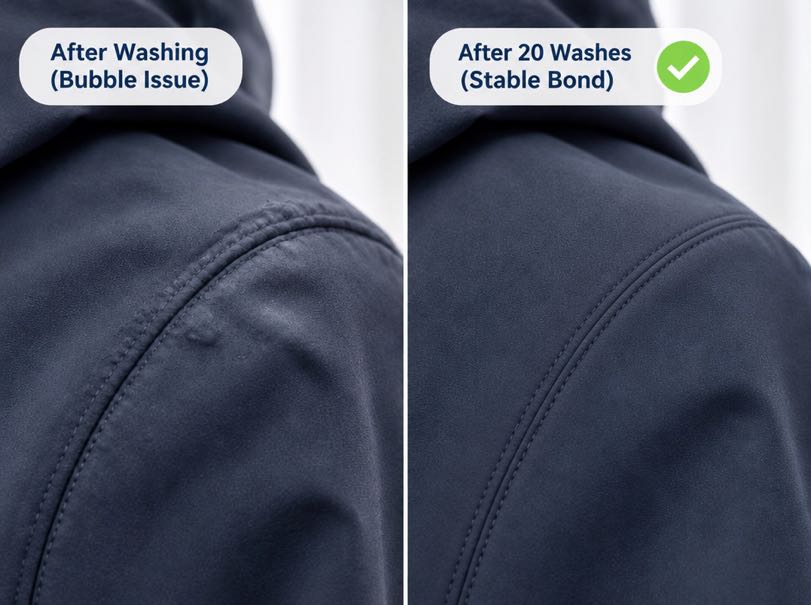
After five washes, small bubbles appeared near the shoulder seams and elbows because the face fabric had separated from the membrane. The problem was caused by our solvent-based PU adhesive. When the oven heated too quickly, the adhesive dried on the surface and trapped solvent underneath, which later escaped during washing.
We switched to water-based PU mixed with reactive PUR hot-melt adhesive and divided the oven process into three stages: drying, curing, and cooling. We also started testing peel strength before washing and after 5 and 20 washes. The bonds now remain stable after 20 washes.
2. Stiff Hand Feel
The approved sample felt soft, but one bulk order came out stiff and made a crackling sound when bent. The full-coat lamination allowed adhesive to spread between the face yarns and glue them together, preventing them from moving freely.
We switched to dot adhesive, applied as small points using a gravure roller, and used a slightly stronger reactive adhesive to maintain bonding strength with less adhesive coverage.
3. Stretch Loss After Washing
Some fabrics stretched well when new but recovered slowly after two washes. High feeding tension had stretched the spandex during production, while excessive oven heat had damaged its elasticity. We now use low tension during lamination and keep the oven temperature within the spandex’s heat tolerance.
Since new fabric may not show this problem, each batch gets a stretch recovery test before and after washing. We stretch the fabric to 1.5 times its original length, release it, and measure how much it remains stretched after 30 seconds.
4. Dye Migration
In one of our previous bulk production runs, a cream fleece lining turned pale blue and grey, especially around the folds. This happened because heat and adhesive solvents caused disperse dyes from the face fabric to transfer to the lining. The problem only appeared after storage or shipping in hot conditions.
To prevent this, we added reduction clearing after dyeing, switched to water-based adhesive, and now check for colour transfer under heat before lamination by placing both fabric layers between white cloths.
Performance Balance and Quality Control
Each finishing process requires a balance between different performance needs. We prioritize breathability over peel strength when extra adhesive could block the membrane’s pores. For fabrics requiring high water pressure, we also recommend light brushing or no brushing.
Each batch is checked for peel strength, appearance after washing, hand feel, stretch recovery, dye migration, water pressure, breathability, and edge curling. If any result falls below our A-grade requirements, the batch is downgraded.
Key Properties of Softshell Fabric: What Good Numbers Look Like
A spec sheet only helps when you know what good looks like. Here is the data sheet for our recycled polyester trilaminate, R-TSHM-009, which weighs 330 gsm and has a 145 cm cuttable width:
Is Softshell Waterproof and Breathable?
Property | Result | Test method |
Water resistance (hydrostatic head) | ≥10,000 mm | |
Breathability (water vapour permeability) | ≥3,000 g/m² per 24 hours | |
Dimensional stability | within ±3% after 5 cleaning cycles at 40°C | ISO 5077 |
Formaldehyde content | Not detectable | ISO 14184-1 |
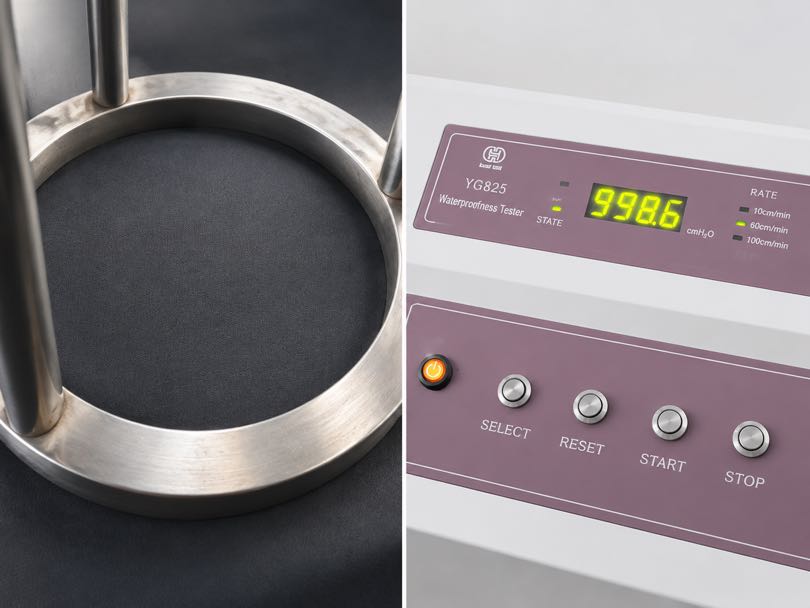
Hydrostatic head measures how much water pressure a fabric can withstand before leaking. Seeing 10,000 mm hydrostatic head and 3,000 g/m² breathability together shows that a fabric can offer both waterproof protection and good breathability if the membrane remains open enough for moisture to pass through. Different test methods can produce different results, so only compare results obtained using the same method.
Is Softshell Windproof and Warm?
The membrane makes the fabric windproof, while the inner knit or fleece affects its warmth. A heavier inner layer provides more warmth. Spandex adds four-way stretch, making softshell more comfortable and easier to move in.
Softshell vs. Hardshell: Can Softshell Meet Professional Standards?
Hardshell is the usual choice for rain protection, so many buyers assume softshell cannot meet professional standards. The table below shows how the two differ in general.
Softshell | Hardshell | |
Waterproofing | Moderate to high, depending on construction | Typically the higher ceiling |
Breathability | More breathable | Less breathable |
Stretch and feel | Stretchy, soft and quiet | Stiffer, with less stretch |
Typical use | Active wear in changeable weather | Sustained heavy rain or alpine use |
The first row matters most for this question. “Moderate to high” covers a wide range, and a softshell’s actual performance depends on its construction and lamination. A certified test result gives a clearer picture than a general claim.
Real Test Report: EN 343 Rain Protection
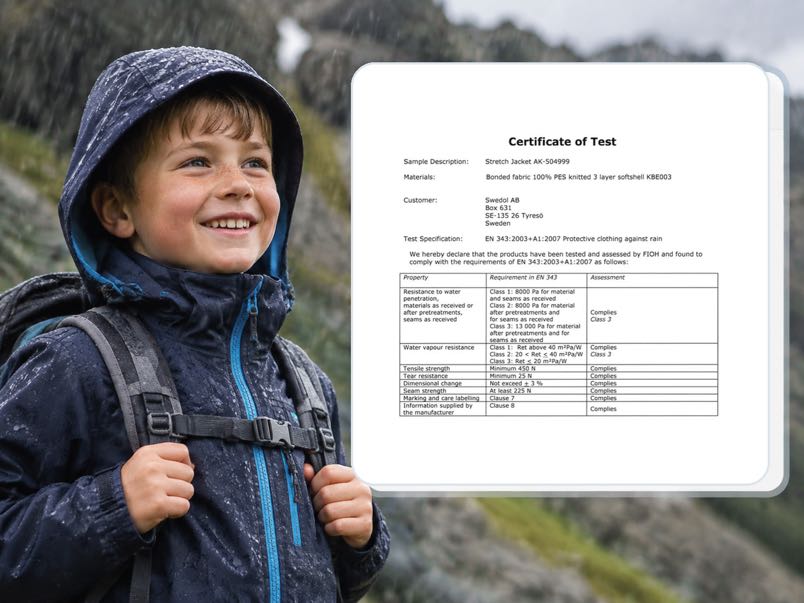
EN 343 is a European standard for protective clothing against rain. It evaluates resistance to water penetration and water vapour resistance (breathability), including requirements for seams.
The certificate below shows the test results for a bonded, 100% polyester knitted three-layer softshell fabric developed for a stretch jacket. Tested under EN 343:2003+A1:2007, the fabric achieved Class 3 for both water penetration resistance and water vapour resistance. It also met the specified requirements for tensile strength, tear resistance, dimensional change and seam strength.
This report uses the 2003 edition of EN 343 and should be treated as a reference for the tested sample, not as proof of compliance with the current EN ISO 24232:2025. Always confirm which standard edition your target market requires.e suitable for prolonged heavy rain or demanding alpine conditions.
What Is Softshell Fabric Used For?

Outdoor and sports brands use softshell for hiking, running and cycling jackets, as well as ski jackets and snow trousers.
For workwear, softshell is used in rain-protective jackets and high-visibility garments. Some fabrics can also meet the colour requirements of EN ISO 20471, the standard for high-visibility clothing.
Everyday brands use softshell for commuter and casual outerwear that needs stretch and light weather protection.
How to Choose, Sew and Care for Softshell Fabric
Choosing the Right Spec
Start with the expected weather conditions and check hydrostatic head and breathability together. Always confirm the test method and standard edition.
Heavier fabrics suit colder conditions, while lighter options are better for active use. Light brushing or an unbrushed face can help maintain water resistance. For dark colours used with light linings, request a dye migration test. For more information about membranes, see our guide to waterproof breathable fabrics.
Always ask for recovery data after washing, not just results from new fabric. Approve the sample only after checking hand feel, stretch and washing performance. The cost of rework can be much higher than the roughly $0.50 per metre saved on adhesive.
Sewing and Care Tips
Because the three layers shrink at different rates, the fabric edges may curl. Lay the fabric flat and let it relax before cutting. When water no longer beads on the surface, wash the garment and use gentle heat to reactivate the DWR finish. Keep the temperature low to protect the spandex. If water still does not bead, reapply a spray-on DWR treatment.
FAQ
Can softshell fabric be made without spandex?
Yes. Mechanical stretch yarns can provide stretch without spandex. This option may suit projects where fibre composition or spandex-free requirements are important.
Can recycled polyester be used for three-layer softshell?
Yes. Recycled polyester can be used in the outer layer. GRS-certified materials are also available for projects with recycled content requirements.
What information should I provide when requesting a softshell sample?
Share your target weight, composition, intended application, colour and estimated quantity. Any reference samples or specific performance requirements will also help us recommend the right fabric.
Conclusion
Softshell fabric combines weather protection, breathability and stretch in one material. However, its final performance depends on the fabric construction, lamination process and finishing. Understanding these factors helps you choose the right fabric and avoid quality problems in bulk production.
Get Softshell Samples
Looking for a suitable softshell fabric for your next project? Contact us to discuss your requirements and request fabric samples and test reports. We can recommend suitable three-layer softshell options based on your application and performance needs.