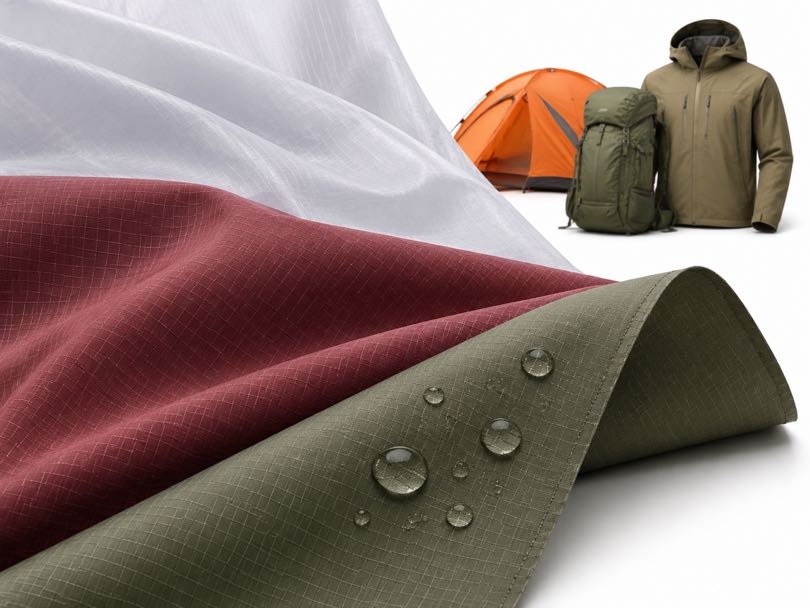
Are you choosing ripstop for a jacket, tent, or pack? The right fabric depends on more than its grid pattern. Yarn type, weight, tear strength, and finishing all affect its performance.
This guide will help you compare nylon and polyester ripstop, understand coating and lamination options, and choose the right specifications for your application.
We’ll also share a real tear-strength test report and explain common problems during fabric development, bulk production, and garment manufacturing.
What Is Ripstop Fabric?
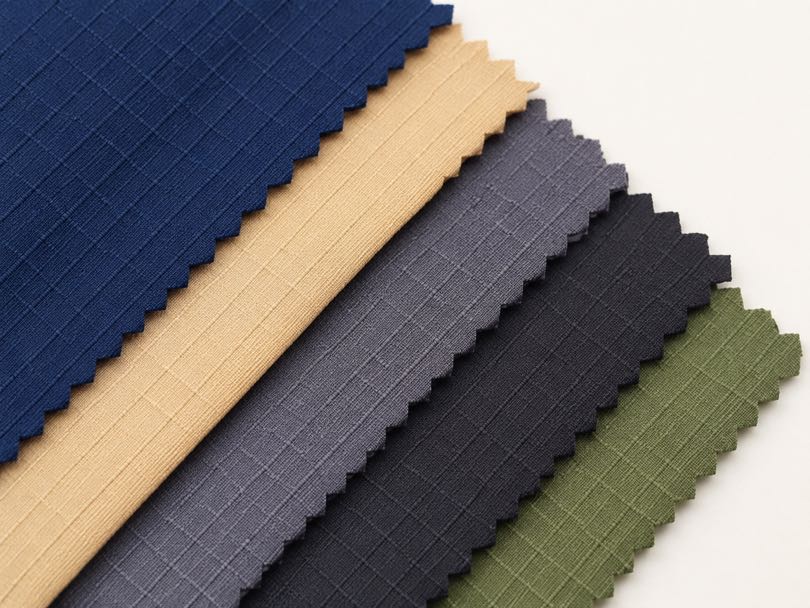
Ripstop is a woven fabric reinforced with thicker yarns at fixed spacing, forming a visible square or diamond grid on the surface. The reinforcement adds very little weight, which is why ripstop suits products that need low weight and tear resistance together.
A Short History of Ripstop Fabric
Ripstop‘s history is closely linked to parachute production. Nylon was developed shortly before World War II, and its production shifted to military use, including parachute cloth.
A 1962 US patent 3032072 describes parachute fabric containing stretch and non-stretch ripstops. After the war, ripstop became widely used in outdoor gear, kites, flags, and balloons. Today, it is a common fabric for outdoor and sports products.
How Ripstop Fabric Is Made
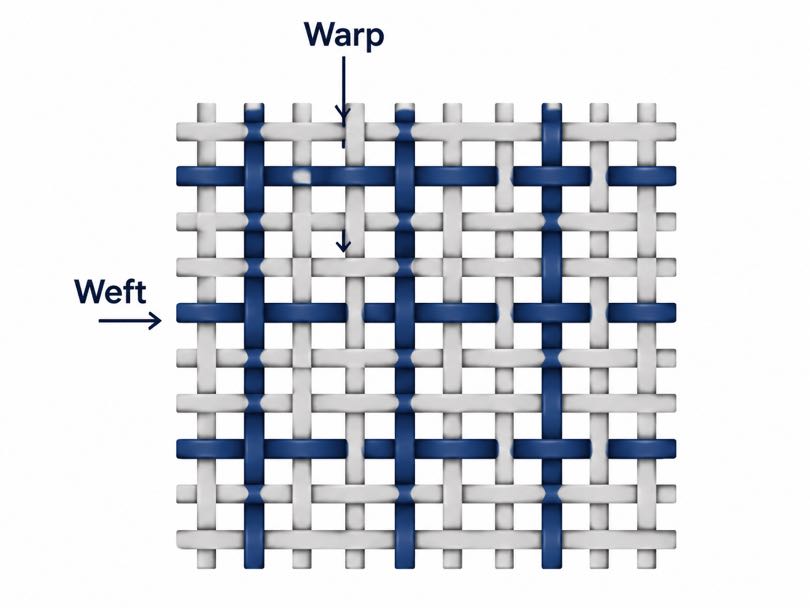
The Reinforcement Weave
The weaver inserts a thicker or doubled yarn in both warp and weft at fixed intervals. The finer yarn between those lines forms the light base fabric. The result is a fabric with a “stop line” built into the structure.
Fibers and Materials
Nylon and polyester are the most common fibers for technical ripstop. Cotton and blended versions also exist. Your choice of fiber sets the baseline for strength, hand feel, and sun resistance. The next section compares the two main options.
Coatings and Finishes
Uncoated ripstop is a base fabric. Finishes decide how the final fabric behaves. Common options include PU or silicone coating, TPU or membrane lamination, DWR (durable water repellent), and calendering (pressing the fabric between heated rollers for a flatter, smoother surface).
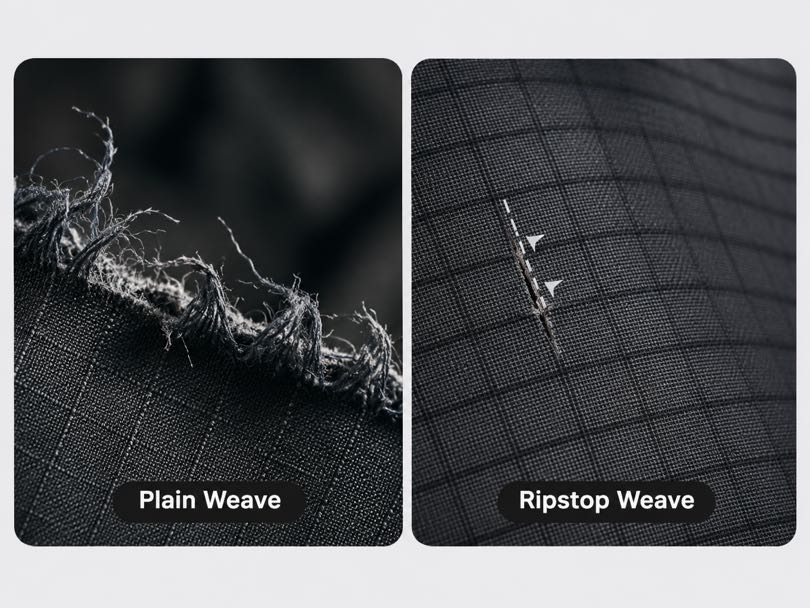
How Ripstop Stops a Tear
In plain woven fabric, a tear moves along the yarns with little resistance. Once it starts, it tends to keep going. In ripstop fabric, the tear meets stronger reinforcement yarns that help slow or stop it from spreading. In most cases, the damage stays within a single grid section.
A denser grid does not always mean a stronger fabric. Grid spacing affects how far a tear can spread, while overall fabric strength also depends on yarn size, fabric density, and finishing.
Ripstop Nylon vs. Ripstop Polyester
Both fibers work. The right one depends on what the product faces most.
Property | Ripstop Nylon | Ripstop Polyester |
Abrasion resistance | Higher | Lower |
UV resistance | Lower; may need protection for long sun exposure | Higher |
Water absorption | Higher | Lower, so it dries faster |
Hand feel | Softer | Crisper |
Cost tendency | Higher | Lower |
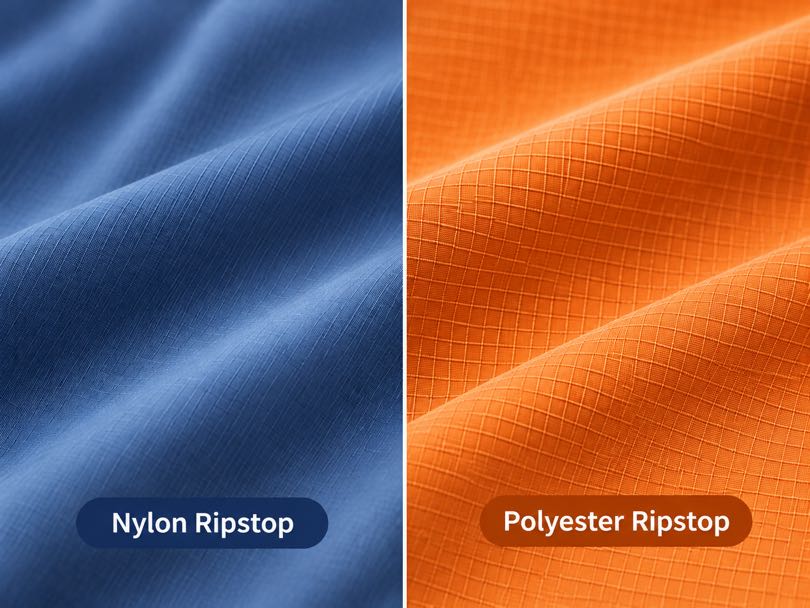
If your product needs to handle frequent rubbing and bending, such as backpacks and straps, nylon is usually the safer starting point. For products exposed to strong sunlight or moisture for long periods, such as covers and awnings, polyester may be the better fit.
Is Ripstop Fabric Waterproof?
No. This is the most common misunderstanding we hear. Ripstop is a weave, not a function. It stops tears from spreading, and that is all it does by itself.
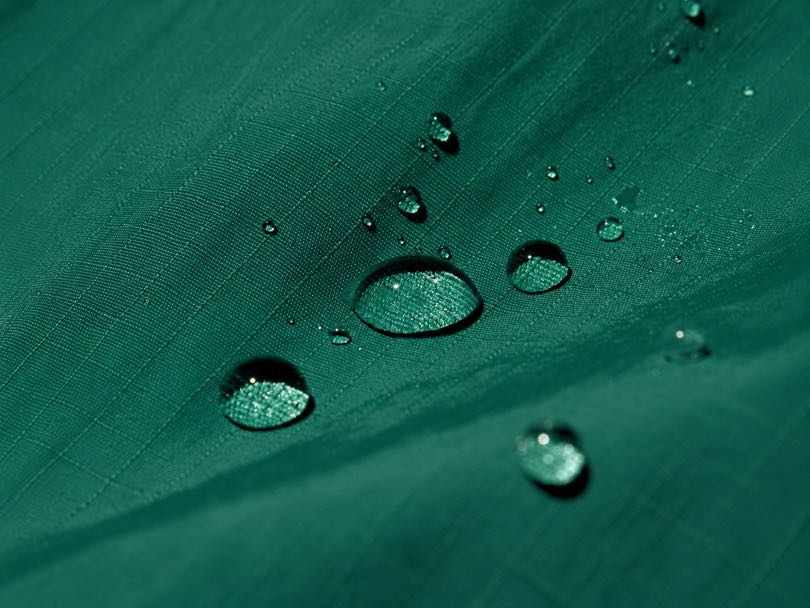
Waterproofing comes from a coating or laminated membrane. When people say “waterproof ripstop,” they mean ripstop weave plus PU or TPU, two separate things sold as one. DWR makes water form droplets and roll off the surface, but it is not waterproof either. Waterproofness is measured by hydrostatic pressure, for example with ISO 811.
When a buyer asks “is it waterproof?”, we ask back: do you need water-repellent, rainproof, or hard-shell level?
What Is Ripstop Fabric Used For?
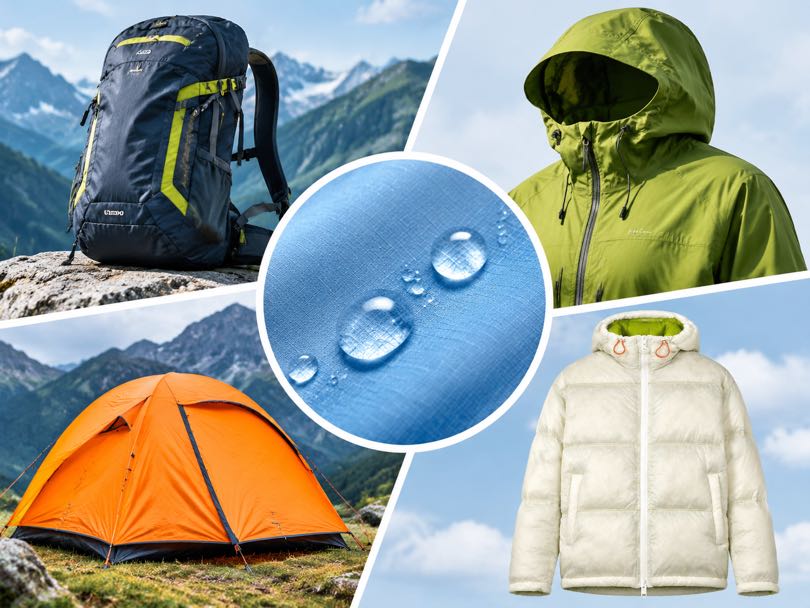
- Outdoor gear: tents, sleeping bags, backpacks, and stuff sacks.
- Clothing: Shell jackets, trousers, windbreakers, and down jackets made with Ultra-lightweight Ripstop Fabric.
- Tactical wear: uniforms and equipment covers.
- Other uses: kites, flags, and hot-air balloons.
How to Read a Ripstop Test Report
Suppliers send numbers. Many buyers cannot tell which number matters.
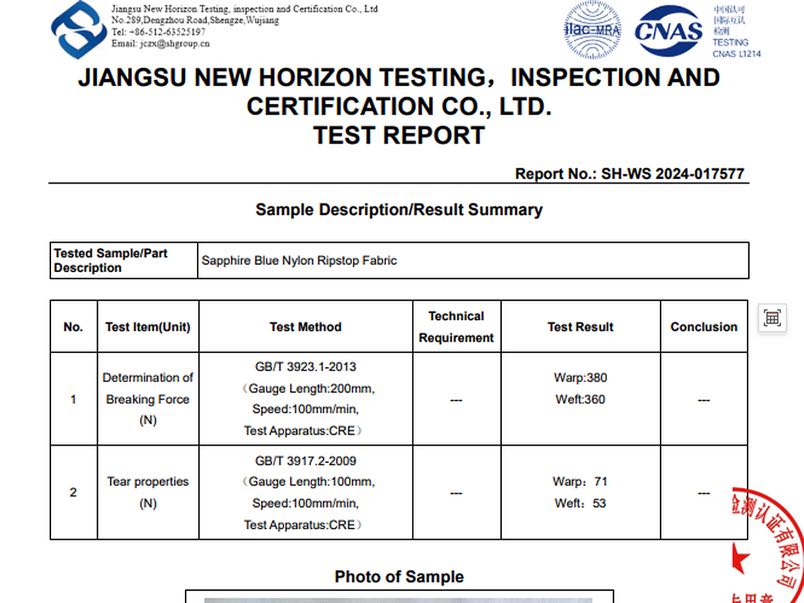
Here is a real example. It comes from a sapphire blue nylon ripstop sample we sent to Jiangsu New Horizon Testing, Inspection and Certification Co., Ltd., a CNAS-accredited lab.
Test | Method | Warp | Weft |
Breaking force (N) | GB/T 3923.1-2013, 200 mm gauge length, 100 mm/min, CRE | 380 | 360 |
Tear force (N) | GB/T 3917.2-2009, 100 mm gauge length, 100 mm/min, CRE | 71 | 53 |
Three habits will help you read any report like this.
1. Understand breaking force and tear force. Breaking force shows how much load pulls the fabric apart. Tear force shows how much force it takes to spread an existing tear.
For ripstop, tear force is usually the number to watch. Do not compare these two results directly, as they measure different properties.
2. Check both fabric directions. In this sample, breaking force is similar in both directions (380 N warp and 360 N weft). Tear force is not: the weft value (53 N) is about three quarters of the warp value (71 N).
If your product loads the fabric in one direction, ask for results in that direction.
3. Check the test method. GB/T 3917.2 is a trouser-shaped, single-tear method, the same test family as ISO 13937-2. Pendulum (Elmendorf) methods, such as ISO 13937-1, work on a different principle.
Results from different methods are not directly comparable. If a competitor quotes a tear number, ask which method produced it.
One more point: this report lists no technical requirement or pass/fail line. It only records the test results for the sample. Your purchase order should clearly state the minimum performance requirements.
From Sample to Bulk: Where Ripstop Projects Go Wrong
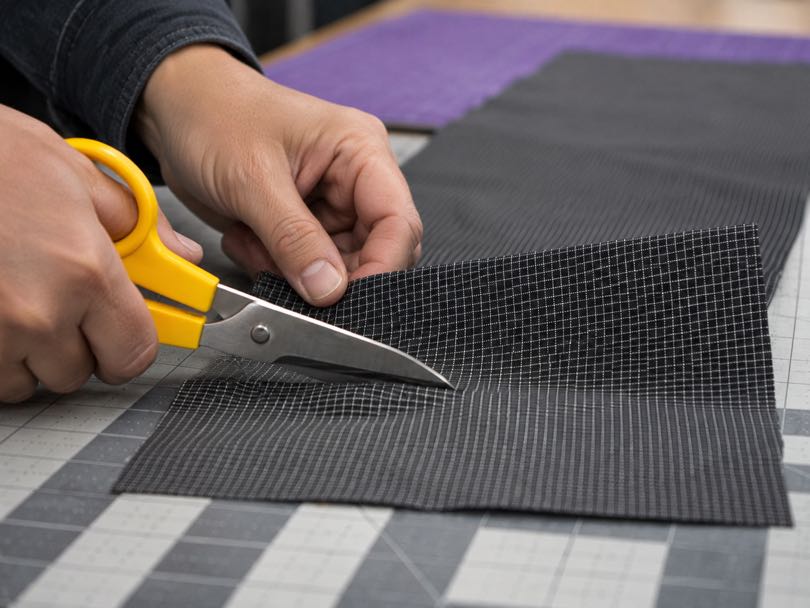
Good base-fabric numbers do not guarantee a good finished garment. We have seen the same problems repeat across customers.
Coating and Lamination Change the Fabric
Customers report three things most often.
“It feels stiffer than the sample.” This may happen when the coating formula changes or more coating is applied. In some cases, extra coating may also hide defects in the base fabric.
Specify soft or crisp hand feel, and use the approved sample as the reference. Ask for a stated base-fabric weight range so coating cannot cover up poor weaving.
“Tear strength dropped after coating.” Coating bonds the yarns together, making it harder for them to move when the fabric is torn. As a result, tear strength may decrease. That is physics, not a defect.
Test both uncoated and coated fabrics during sample development. Choosing a softer coating material and controlling the coating weight can help reduce the loss in tear strength.
“The DWR washed out” or “the laminate isn’t breathable.” DWR is a surface treatment that can lose effectiveness after repeated washing. Membrane selection also affects the balance between waterproof protection and breathability.
State whether you need standard or durable DWR, and the wash durability you expect. Write the breathability target into the order too, not just the word “waterproof.”
Why Bulk Looks Different from the Sample
In our experience, bulk fabric may look different from the approved sample for several reasons. Changes in dyeing conditions can cause colour differences, while different yarn batches may affect thickness, twist, and surface appearance.
Variations in coating materials and machine settings can also change fabric weight and hand feel. In addition, uneven shrinkage during heat-setting or fabric tension can affect fabric dimensions and grid alignment.
To reduce these risks, use a signed approval sample as the reference for colour and hand feel, set an acceptable colour difference using a grey scale rating, and agree on yarn and dye lot requirements before production. We also recommend requesting a production sample before completing the full order.
Common Finishing Mistakes
Some fabric combinations may pass sample testing but cause problems during actual use. Based on our production experience, we recommend avoiding the following:
- Lightweight ripstop with heavy double-sided PU coating. The coating can outweigh the fabric, the result feels like plastic sheet, and tear force can drop significantly.
- Nylon ripstop with heavy calendering and thick coating. Calendering presses the fabric surface flat and may reduce tear performance. Adding a thick coating can make the fabric too stiff for garments.
- DWR over a non-porous TPU film. The TPU film already limits breathability, and adding DWR may reduce it further. Choose a breathable membrane if both waterproof protection and breathability are required.
- Soft coating with heavy calendering. It can be difficult to achieve both a soft feel and a high-gloss surface. The surface finish may also wear off after repeated washing.
- Ultra-soft hand combined with a very high water-pressure rating. Water resistance needs more coating or film. Softness needs less. Pick the priority at the sampling stage.
What Your Factory Will Run Into
Garment factories often face similar problems when cutting and sewing ripstop fabric. Most are related to the fabric structure and can be reduced with the right sewing settings.
Factory complaint | Common cause | What we suggest |
Skipped or broken stitches | Needle deflects at thick grid crossings | Fine, sharp needle suited to dense woven fabric; lower speed; seams placed away from crossings where possible |
Seam slippage | Smooth, high-density yarns | Choose needle size and stitch length together; allow a wider seam allowance; run a slippage test before bulk |
Puckering | Stretch-coated fabric or uneven fabric feeding | Adjust presser-foot pressure and feeding speed; paper backing if needed |
Needle-hole leakage | Needles puncture waterproof fabric | Seam tape on every seam; waxed thread; use the finest practical needle, since denser stitching means more holes |
Grid misalignment | Poor matching or wrong shrinkage | Mark match points on the marker; relax fabric before cutting |
Fraying at cut edges | Yarns come loose along cut edges | Hot knife or laser cutting; finish edges promptly (overlock or binding) after scissor cutting |
We can provide a sewing guide with bulk orders. We also recommend testing a 0.5-meter fabric sample on your factory’s sewing line before placing a full order.
Advantages, Limits, and When You Don’t Need Ripstop
Ripstop offers good tear resistance without adding too much weight. It is available in a wide range of weights, colours, and finishes, and can be combined with coatings, laminations, and DWR treatments.
However, ripstop usually costs more than plain-weave fabric of similar weight. Coatings and laminations may also affect its tear performance, and the fabric may require adjusted sewing settings.
Not every product needs it. A product that rarely sees snags or sharp edges, such as a casual lining, may work fine in plain weave. But when tears and punctures are a real concern, ripstop is a practical upgrade.
How to Source Ripstop Fabric: Your RFQ Checklist
Repeated sampling often happens because important details are missing from the initial inquiry. Here are the key details we recommend including in every RFQ:
- End use and garment type
- Fabric composition (nylon, polyester, or blend), yarn denier, and grid spacing
- Target fabric weight range
- Finish: DWR, PU coating, or TPU lamination, single- or double-sided
- Key performance targets: water pressure, moisture permeability, and tear force, as ranges rather than exact numbers
- Color: Pantone reference or approved sample
- Hand feel: soft or crisp, matte or glossy
- Quantity and target price range
- Certifications and compliance: bluesign, OEKO-TEX, GRS, and REACH compliance (SVHC test report)
- Lead time and destination port
Providing these details at the beginning helps reduce unnecessary sampling rounds and makes fabric development more efficient.
Frequently Asked Questions
Is ripstop fabric waterproof?
No. Ripstop is a weave that stops tear spread. Waterproofness comes from a coating or laminated membrane.
Is ripstop stronger than plain-weave nylon?
Not automatically. Ripstop limits how far a tear spreads. Overall strength depends on yarn size, density, and finish.
Can ripstop be coated or laminated?
Yes. Coating and lamination are standard. They change hand feel, tear performance, and breathability, so test both before bulk production.
Which is better for outdoor gear, nylon or polyester ripstop?
It depends. Nylon usually wins on abrasion resistance and hand feel. Polyester is often the better pick for UV exposure and low water absorption.
Conclusion
Ripstop adds tear resistance through its weave. Waterproofing, hand feel, and bulk consistency depend on finish, process control, and clear order specs.
Before you commit, request the test method and sample data, confirm hand feel with an approved sample, and run a trial sew at your factory.
Talk to Us About Your Ripstop Project
With over 18 years of experience in outdoor and functional fabrics, we supply materials for outerwear, sportswear, workwear, and outdoor applications. From sampling to bulk production, we help customers find the right fabrics for their needs.
If you are choosing a ripstop fabric, share your specifications and performance requirements with us. We’ll help you select suitable materials and provide samples for evaluation. Contact us to discuss your project and request a quotation.