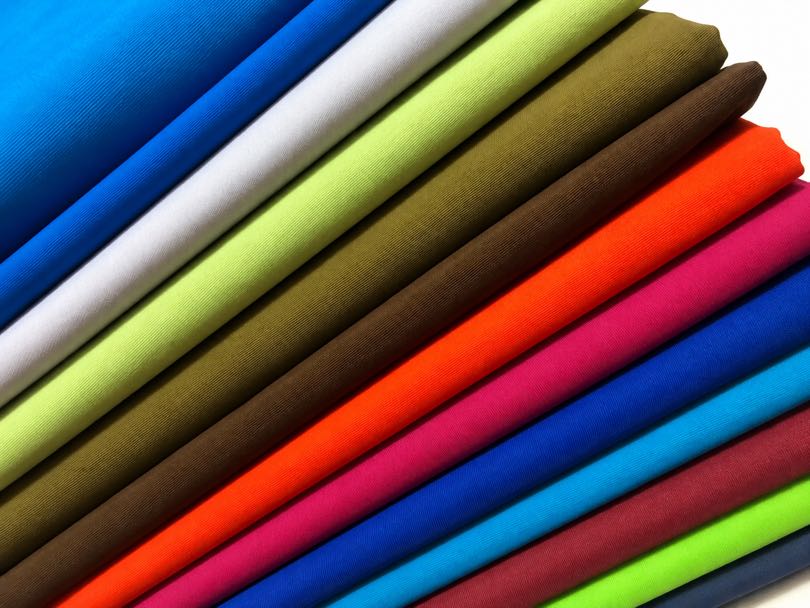
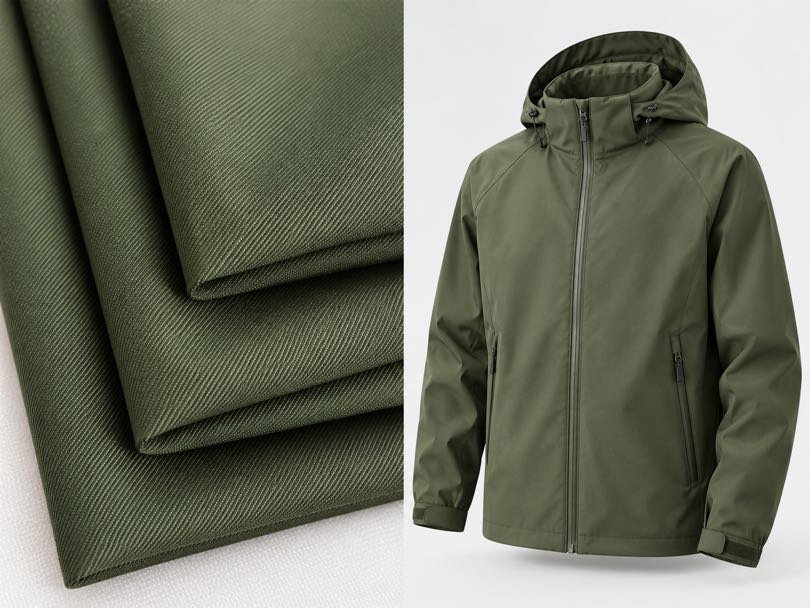
Taslan fabric may sound complicated, but the process is simple: air is used to add texture to smooth synthetic yarns. This makes the fabric feel softer and gives it a more natural look.
This guide explains how taslan fabric is made, which constructions are common, and what to check before you order. It draws on two real lab reports for our own fabrics and on what we see in production. Let’s start with what taslan fabric actually is.
What Is Taslan Fabric?
Taslan fabric is woven from air-textured yarn. The name began as a brand name and is now used generically. Most taslan fabric is nylon or polyester, and stretch versions add spandex.
Compared with smooth fabrics such as nylon taffeta, Taslan fabric has a matte surface and a soft, slightly dry feel. Its textured yarn gives the fabric a more natural appearance while maintaining the durability of synthetic fibers.
How Is Taslan Made?
The key step is air-jet texturing. Synthetic yarn passes through a machine where compressed air creates small loops in the fibers, giving the yarn a fuller, softer texture.
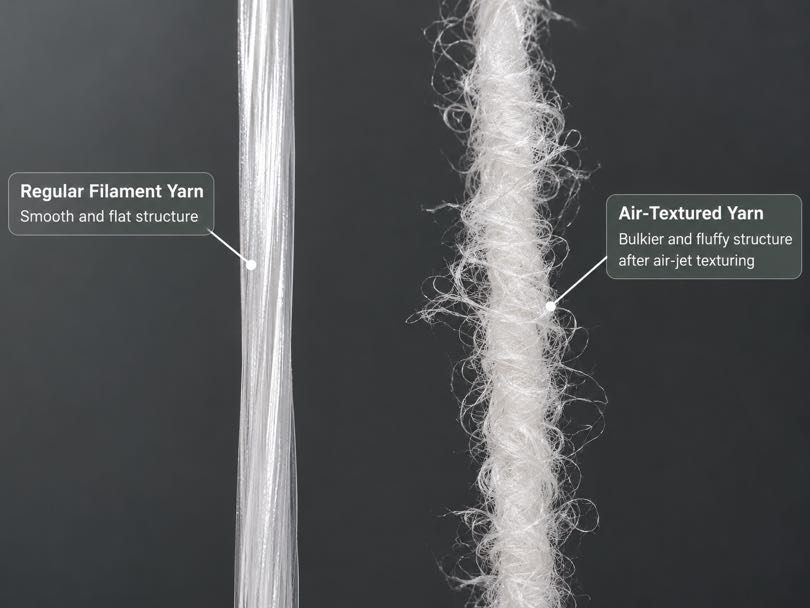
The yarn is then stabilized and woven into fabric. After weaving, the fabric is dyed and finished with treatments such as DWR, coating, or lamination. These small loops also help reduce shine, giving Taslan fabric a more natural, matte appearance.
In our production experience, finishing can significantly change the fabric’s feel and performance. DWR, coating, or lamination may affect its texture and softness, so it’s important to check the finished fabric sample before bulk production.
Common Taslan Constructions
The following specifications are common across our Taslan fabric range. “T” refers to the total number of warp and weft yarns per inch, “D” refers to yarn denier, and fabric weight is measured in g/m².
Polyester | Nylon | |
Density | 174T / 184T / 189T / 196T / 228T | 174T / 184T / 189T / 196T / 228T |
Yarn (warp × weft) | 75D × 160D 75D × 320D | 70D × 160D 70D × 320D |
Weight (g/m²) | 85–90 / 90–95 / 95–100 / 100–105 / 120–150 | 85–90 / 90–95 / 95–100 / 100–105 / 100–150 |
Common applications | Sportswear, casual jackets, coated/outdoor workwear | Windbreakers, shell jackets, outdoor trousers, bags/backpacks. |
The table shows how Taslan fabric specifications vary across different applications. Lighter constructions are commonly used for sportswear and windbreakers, while heavier options are more suitable for outdoor jackets, workwear, and bags. The best choice depends on the garment’s intended use and required performance.
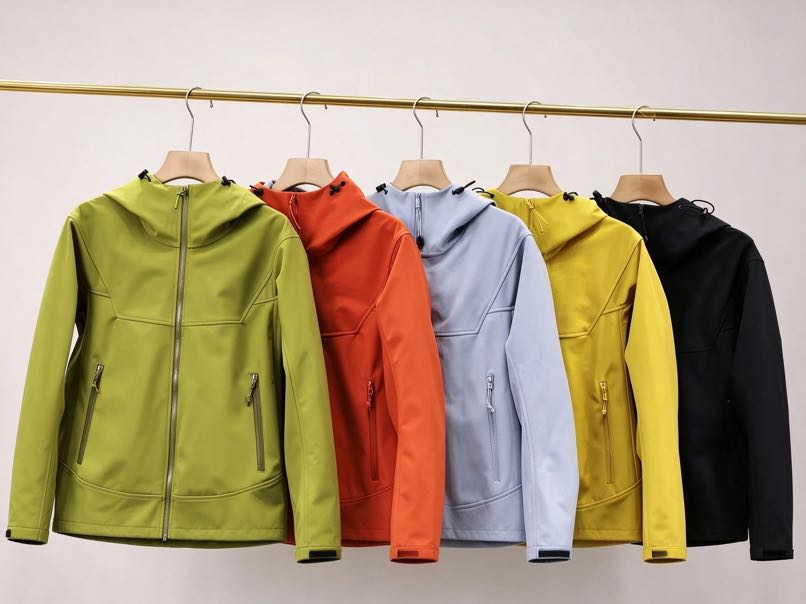
Nylon Taslan vs Polyester Taslan
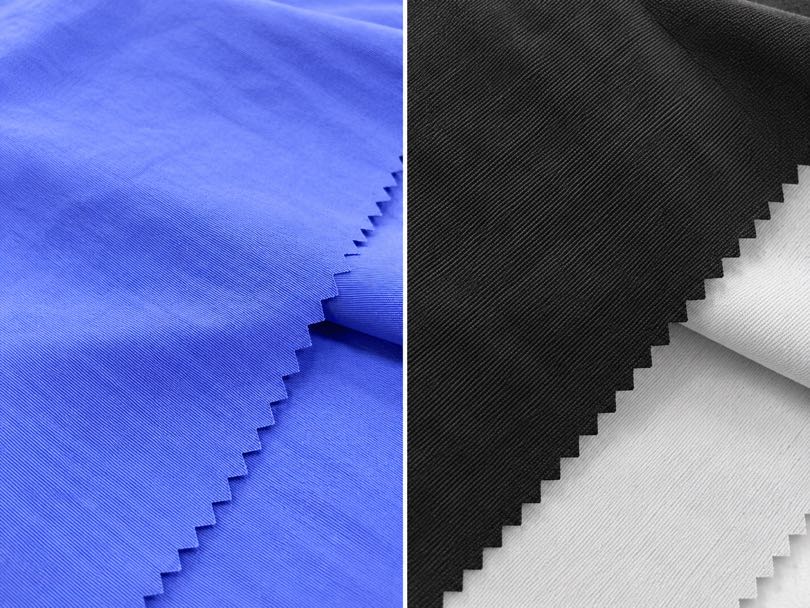
Nylon and polyester are the two most common materials used to make Taslan fabric. Both have a soft, matte appearance, but they differ in feel, durability, and performance.
Nylon Taslan generally feels softer and offers good abrasion resistance, making it a popular choice for outdoor jackets, hiking pants, and workwear. It also absorbs more moisture than polyester, which can affect drying time.
Polyester Taslan absorbs less moisture and generally dries faster. It also offers good resistance to sunlight and is commonly used for sportswear, windbreakers, and outdoor clothing. Polyester is often a more cost-effective option, depending on the construction and finishing.
Neither material is always better. The right choice depends on the intended use, fabric weight, required performance, and budget. Coatings, DWR finishes, and stretch yarns can also change the final properties of both fabrics.
Strengths and Limits
Taslan fabric offers a soft, matte appearance, good durability without being too heavy, and the option to add stretch and functional finishes. It is also suitable for coating and lamination.
However, its textured surface may be more likely to snag or show signs of wear in certain conditions. Abrasion and snagging resistance should therefore be tested on the finished fabric.
Is Taslan Fabric Waterproof?
Taslan fabric is not waterproof by itself. Its water resistance depends on the fabric construction and finishing treatments. A DWR finish helps water form droplets and roll off the surface, while a PU coating or TPU lamination helps prevent water from passing through the fabric. These treatments are commonly used to make waterproof fabrics for outdoor jackets and functional outerwear.
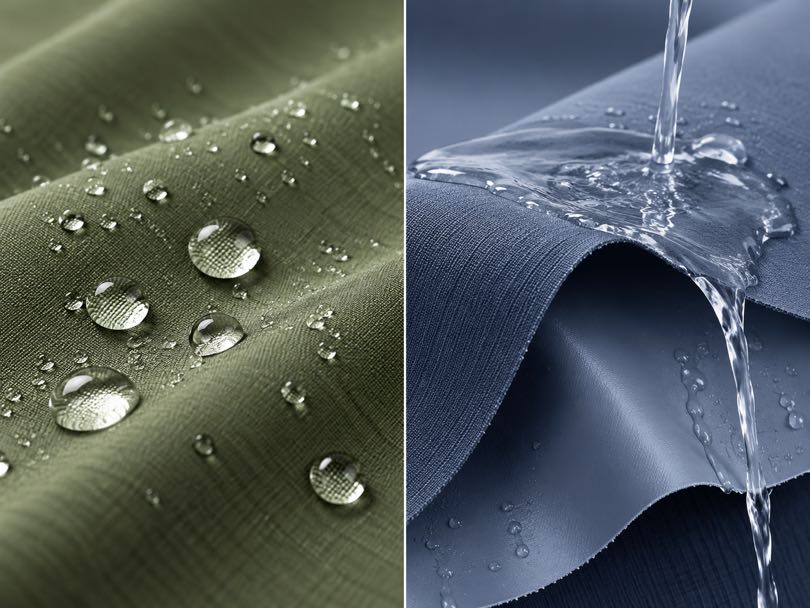
Different tests measure different types of water protection. The ISO 4920 spray test measures surface water repellency, while the ISO 811 test measures how much water pressure the fabric can withstand. For waterproof Taslan fabric, results before and after washing should be checked, as water resistance may decrease with repeated washing.
PFAS-Free Finishes and Environmental Compliance
Some traditional water-repellent finishes contain PFAS, while fluorine-free DWR offers an alternative for outdoor fabrics.
Under Regulation (EU) 2024/2462, restrictions on PFHxA and related substances took effect on 10 October 2026 for certain consumer textiles, including clothing and accessories. The limits include 25 ppb for PFHxA and its salts and 1,000 ppb for PFHxA-related substances.
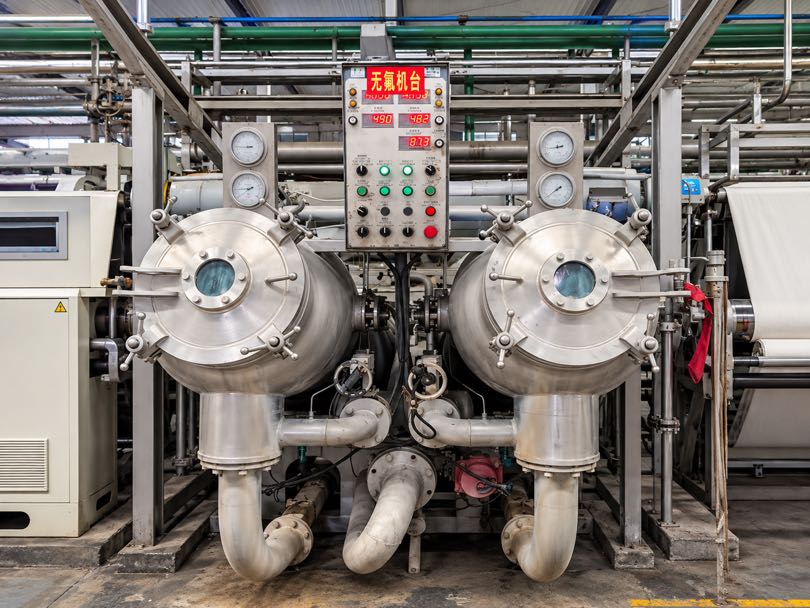
To help reduce cross-contamination, some manufacturers use dedicated equipment for fluorine-free finishing. We follow the same approach in our production, as shown in the photo below.
Real PFAS Test Results
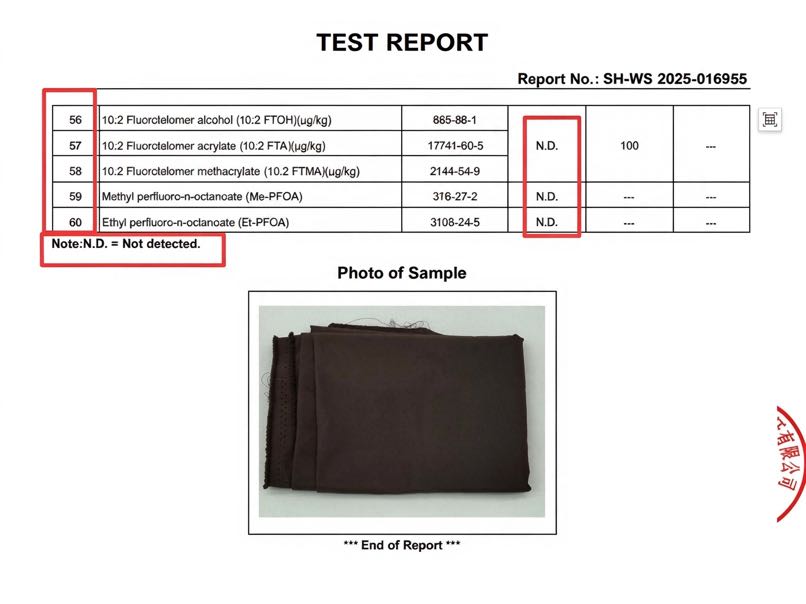
We submitted a fabric sample from our product range for PFAS testing under EN 17681-1:2025 (Report No. SH-WS 2025-016955). The report covered 60 PFAS substances, including PFOA, PFOS, PFHxA, and selected fluorotelomer compounds. All 60 substances were reported as not detected within the stated detection limits.
These results apply only to the tested sample and the substances covered by the test. They do not establish that every Taslan fabric is PFAS-free or confirm compliance with all PFAS regulations.
Reading a Real Test Report: Sea Water Colour Fastness
The second report uses GB/T 5714-2019 to test the sea water colour fastness of Taslan fabric, using a salt solution containing 30 g/L sodium chloride. This standard is based on ISO 105-E02:2013 and measures how well a fabric’s colour resists fading or staining other materials when exposed to sea water.
Item | Result (grey scale, 1–5) |
Colour change | 4 |
Staining: wool, acrylic, polyester, polyamide, cotton, acetate | 4–5 on all six |
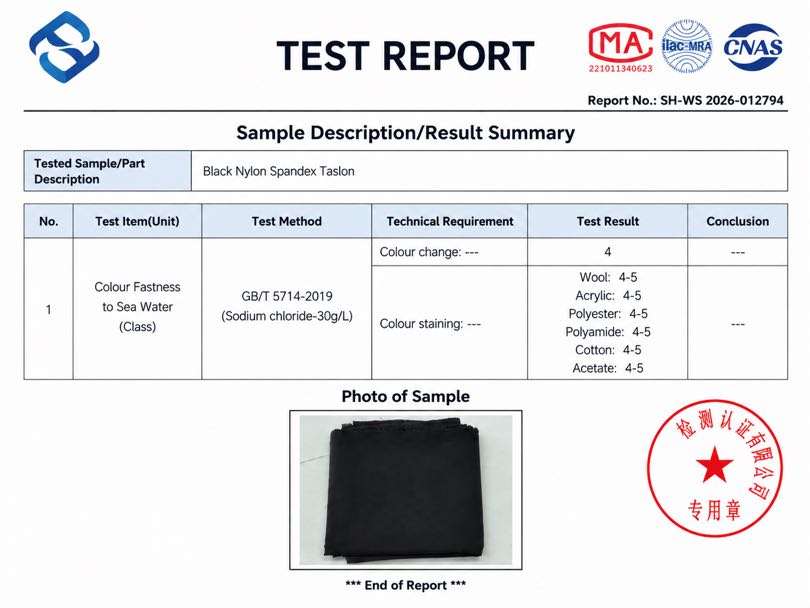
A grade 5 means no visible colour change, while grade 4 indicates a slight colour change in the tested black fabric. A grade 4–5 for staining across all six fibres means very little colour transferred. These results are useful when choosing Taslan fabric for beachwear, boating gear, and other products exposed to sea water.
In our experience, dark shades such as black, navy and chocolate are the most demanding for staining, and results do not carry over between colours. This report covers one colour and lists no pass/fail line, so set your own minimum grade and test the colour you order.
What to Put in a Taslan Spec
Clear fabric specifications help avoid misunderstandings. The table lists the items we find most useful to write down.
Spec item | What to write |
Fibre content | Exact percentages, including spandex |
Density, yarn denier and GSM | All three, with an agreed tolerance |
Width | Usable (cuttable) width |
Colour | Reference standard, light source, approval method |
Finish | DWR type, and whether it is fluorine-free |
Coating / lamination | Type, position, after-wash requirement |
Tests | Method and pass line |
One common mistake is listing a test method without a clear pass requirement. For example, “tested to ISO 105” does not set a minimum standard, while “grade 4 or higher” provides a clear target.
Common test methods include ISO 105-C06 (washing), ISO 105-X12 (rubbing), ISO 105-E04 (perspiration), ISO 13937 (tear), and ISO 12947 (abrasion). We recommend testing bulk production fabric, not just the approved sample. Swatches can also be requested to compare different Taslan fabric constructions.
Taslan FAQ
Is Taslan fabric waterproof?
Not by itself. Taslan fabric needs a suitable coating or lamination for waterproof protection, while DWR helps water roll off the surface. Waterproof performance can be checked using the ISO 811 test.
What is the difference between Taslan and regular nylon?
Taslan uses air-textured yarn, giving it a softer, more matte appearance. Many regular nylon fabrics use smooth filament yarns, making them look shinier and feel smoother.
Which Taslan construction should I choose?
It depends on the intended use. Lighter constructions are suitable for sportswear and windbreakers, while heavier options are often used for outdoor jackets, workwear, and bags.
Can Taslan fabric stretch?
Yes. Taslan fabric can include spandex to provide stretch, making it suitable for sportswear, outdoor trousers, and other clothing that needs flexibility.
Does Taslan fabric shrink, and how should I wash it?
Taslan fabric generally has low shrinkage when properly finished, but results vary by construction. Follow the care instructions, wash gently, and avoid high heat.
Conclusion
Taslan fabric is a practical choice for outdoor clothing, sportswear, and functional jackets. Its soft, matte appearance and durable synthetic yarns make it suitable for many applications. However, the right fabric depends on its construction, finishing, and required performance. Checking fabric specifications, samples, and test reports can help ensure the material meets your needs.
At IDEARTEX, we offer a wide range of Taslan fabrics and other functional woven fabrics, with options for different weights, textures, and finishes. Whether you need water-repellent, waterproof, or stretch fabrics, contact us to discuss your requirements and request suitable samples.