
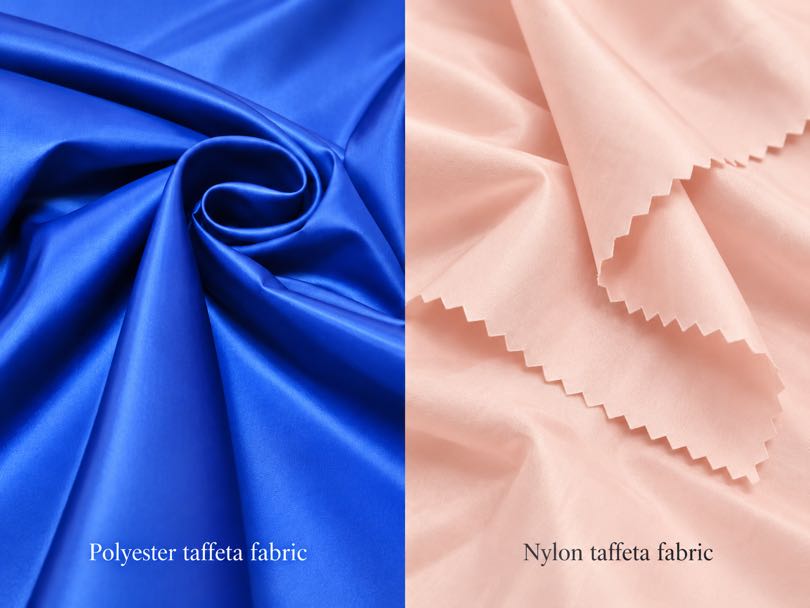
Choosing the right taffeta fabric involves more than comparing nylon and polyester. Fabric density, yarn size, weight, and finishing treatments can greatly affect performance, especially in outdoor jackets, down jackets, and clothing linings.
For example, two taffeta fabrics with similar weights may perform differently in tear strength, breathability, or water resistance. Choosing the wrong construction can lead to down leakage, fabric damage, or problems during bulk production.
In this guide, we’ll explain the differences between polyester and nylon taffeta, explore their properties and uses, and share practical fabric selection tips. We’ll also include our own third-party test results to help you evaluate fabric quality before placing bulk orders.
What Is Taffeta Fabric?
Taffeta fabric is a tightly woven fabric, typically featuring a plain weave structure and a smooth surface. It can be made from polyester, nylon, and other fibers. These fabrics are widely used in apparel for their lightweight feel, practical performance, and versatile finishes.
Common applications include jacket linings, windbreakers, down jackets, sportswear, and outdoor equipment. Depending on the application, taffeta can be finished to provide water resistance, wind protection, or improved downproof performance.
How Is Taffeta Fabric Made?
Taffeta production begins with weaving, followed by dyeing, heat setting, and finishing treatments. Manufacturers adjust production parameters to achieve the desired fabric appearance, hand feel, and performance.
Calendering uses controlled heat and pressure to create a smoother, more compact surface, helping improve wind resistance and downproof performance. DWR treatments enhance water repellency, while PU coatings provide additional water resistance.
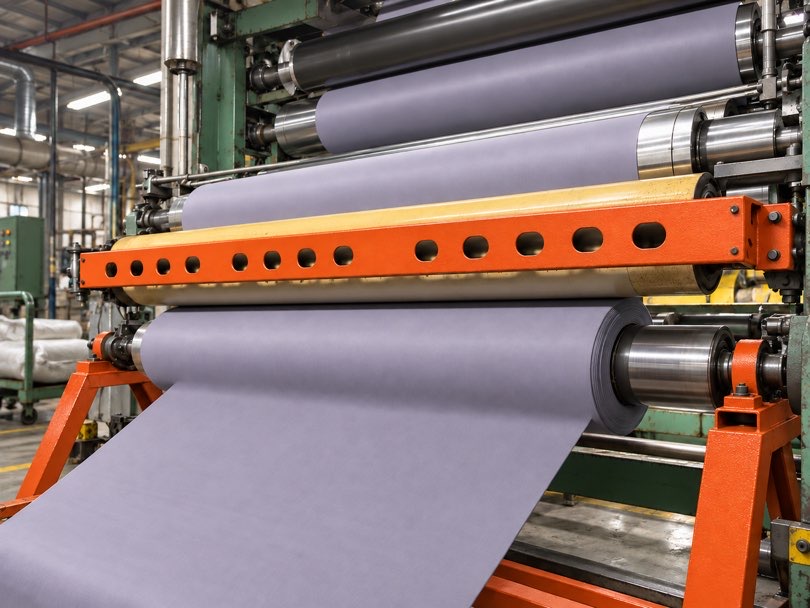
Even fabrics made with the same yarn size can perform differently due to variations in weaving and finishing conditions. Consistent production control is essential for maintaining quality across bulk orders.
Polyester vs. Nylon Taffeta: What’s the Difference?
Polyester and nylon are the two main synthetic materials used for taffeta fabrics in functional apparel. Both can be lightweight, smooth, and suitable for outdoor clothing, but they have different material characteristics.
Fiber Composition and Fabric Feel
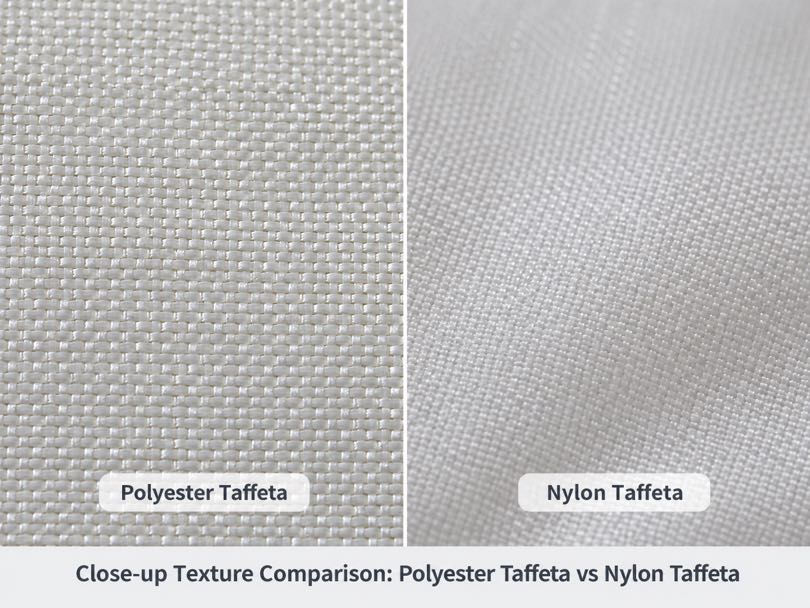
Polyester taffeta is made from polyester fibers and typically has a crisp, structured feel with good shape retention. Nylon taffeta is made from nylon fibers and generally offers a softer, more flexible hand feel, making it suitable for lightweight jackets and outdoor apparel.
Both fabrics can achieve different textures through yarn selection and finishing treatments, depending on the desired application.
Strength, Weight, and Durability
Nylon taffeta generally offers good abrasion resistance and toughness, making it suitable for outdoor apparel exposed to frequent movement and friction. Polyester taffeta also provides reliable strength and durability, particularly for linings, windbreakers, and everyday apparel.
Both materials are available in lightweight constructions, with strength and durability varying depending on fabric specifications. A more accurate comparison requires actual test results.
Polyester vs Nylon Taffeta Comparison
Feature | Polyester Taffeta | Nylon Taffeta |
Main Material | Polyester | Nylon |
Surface Feel | Smooth, often crisp | Smooth, often softer |
Abrasion Resistance | Good, depending on construction | Often good |
Moisture Absorption | Lower | Higher |
Dimensional Stability | Generally good | Depends on construction and finishing |
Cost | Usually more affordable | Often higher |
Common Uses | Linings, jackets, covers | Down jackets, windbreakers, outdoor apparel |
Functional Finishes | DWR, PU, coating | DWR, PU, coating |
Which Should You Choose?
For cost-sensitive jacket linings and general outerwear, polyester taffeta is often a practical choice, while nylon taffeta is better suited for lightweight outdoor jackets and performance apparel requiring abrasion resistance and flexibility.
The final choice should depend on the garment’s performance requirements and tested fabric specifications.
Key Properties of Taffeta Fabric
Lightweight and Smooth Texture
Taffeta fabric features a smooth, tightly woven surface with a subtle sheen. Its lightweight construction makes it suitable for jacket linings, windbreakers, packable clothing, and lightweight outerwear.
Crisp Hand Feel and Shape Retention
Taffeta often has a crisp, structured hand feel that helps garments maintain their shape. Depending on yarn specifications and finishing treatments, it can offer different levels of stiffness and flexibility for various apparel applications.
Downproof Performance
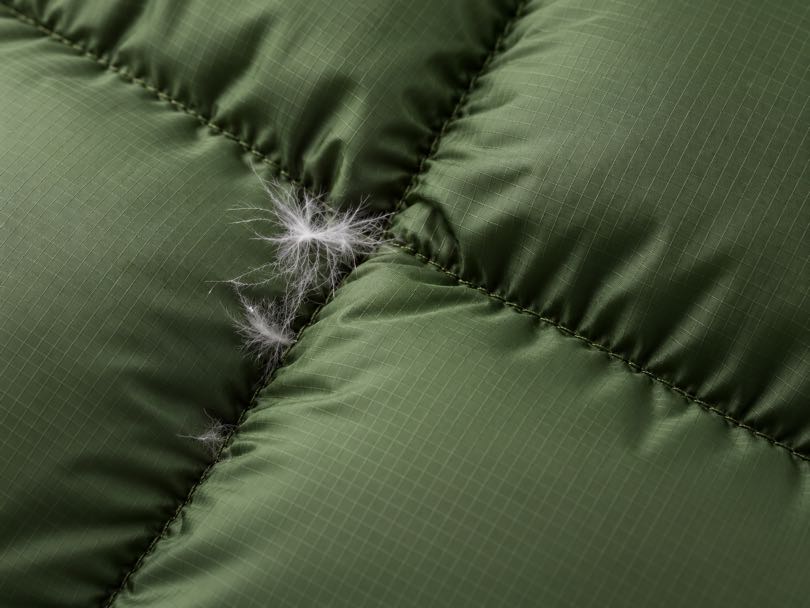
High-density taffeta can provide good downproof performance by reducing the gaps between yarns. Calendering further creates a tighter fabric structure, helping prevent down and feathers from escaping. These properties make suitable taffeta fabrics useful for down jacket linings and outer shells.
Durability and Easy Care
Polyester and nylon taffeta can offer good durability and resistance to everyday wear. Polyester taffeta generally provides good wrinkle resistance, low moisture absorption, and quick-drying properties, making it easy to maintain.
Water Repellency and Waterproof Finishes
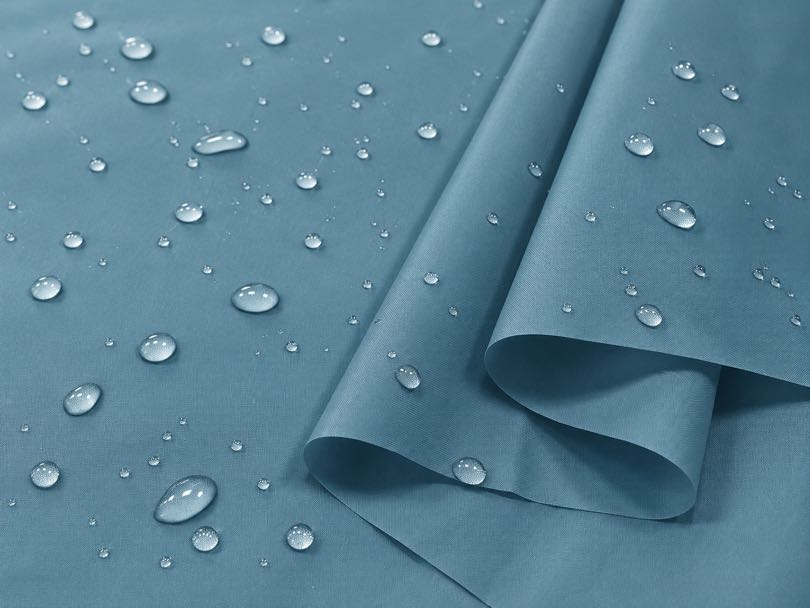
Standard taffeta is not inherently waterproof, but DWR finishes can improve water repellency, while PU coatings provide additional resistance to water penetration.
Waterproof performance can be evaluated using ISO 811:2018, which measures fabric resistance to water penetration under hydrostatic pressure.
Common Types of Polyester and Nylon Taffeta Fabrics
Taffeta fabrics can be classified by fiber composition, surface appearance, weaving structure, and finishing. One fabric may belong to more than one category.
Polyester Taffeta Fabric
Polyester taffeta fabric is available in plain-weave, twisted-yarn, matte, and other finished options. Common specifications include 170T–230T for linings and higher-density constructions such as 260T–420T for selected outerwear applications. It is widely used in jacket linings, casual outerwear, and functional apparel.
Nylon Taffeta Fabric
Nylon taffeta fabric is commonly supplied in specifications such as 70D 210T, 30D 320T, and 20D 400T. These constructions offer different balances of weight, fabric density, hand feel, and strength. Typical uses include windbreakers, lightweight jackets, down jackets, and outdoor clothing.
Coated Taffeta Fabric
Coated taffeta fabric uses additional finishing layers, such as PU coatings, to improve specific functions. Depending on the coating system, it can be developed for rainwear, protective covers, and outdoor equipment.
Testing the finished fabric is important because coatings may affect weight, breathability, flexibility, and hand feel.
Ripstop Taffeta Fabric
Ripstop taffeta fabric contains reinforced yarns that create a visible grid structure. Lightweight constructions such as 20D ripstop nylon taffeta are often considered for outdoor jackets and packable equipment.
Recycled Taffeta Fabric
Recycled polyester and nylon can also be used to produce taffeta fabrics. Options such as recycled 380T nylon taffeta can support apparel projects that require recycled materials.
For recycled taffeta fabrics, the Global Recycled Standard (GRS) provides guidance on recycled content verification and supply-chain requirements.
How to Choose Taffeta Fabric for Different Applications
Selecting the right taffeta fabric depends on its intended application, including requirements for weight, strength, comfort, and finishing. Polyester and nylon taffeta are available in various specifications to meet different apparel and outdoor fabric requirements.
Choose the Right Denier and Fabric Density
Denier (D) measures yarn linear density, while specifications such as 190T, 210T, and 400T refer to fabric thread counts. These values describe different properties and should not be compared directly.
For example, 20D nylon taffeta uses finer yarns than 70D nylon taffeta, but the final fabric weight (GSM) also depends on weaving density and finishing treatments.
Recommended Taffeta Specifications by Application
The following specifications are common starting options based on our polyester and nylon taffeta product range. They are sourcing references, not fixed industry standards.
Recommended Fabric | Application | Common Specifications | Key Requirements |
Polyester Taffeta | Jacket Linings | 170T–230T, 63D × 63D | Smooth Feel, Colorfastness |
High-Density Polyester Taffeta | Down Jackets | 260T–350T, 50D × 50D; 380T–420T, 20D × 20D | Downproof, Lightweight |
Nylon Taffeta | Lightweight Windbreakers | 190T–230T, 70D × 70D; 260T–300T, 50D × 50D | Tear Strength, DWR |
High-Density Nylon Taffeta | Lightweight Down Jackets | 320T–350T, 30D × 30D; 380T–420T, 20D × 20D | Downproof, Tear Strength |
Matte / Ripstop Nylon Taffeta | Outdoor Jackets | 20D 380T–400T; 20D Ripstop | Tear Resistance, Water Repellency |
Recycled Nylon Taffeta | Sustainable Outerwear | Recycled 380T Nylon Taffeta | Recycled Content, Traceability |
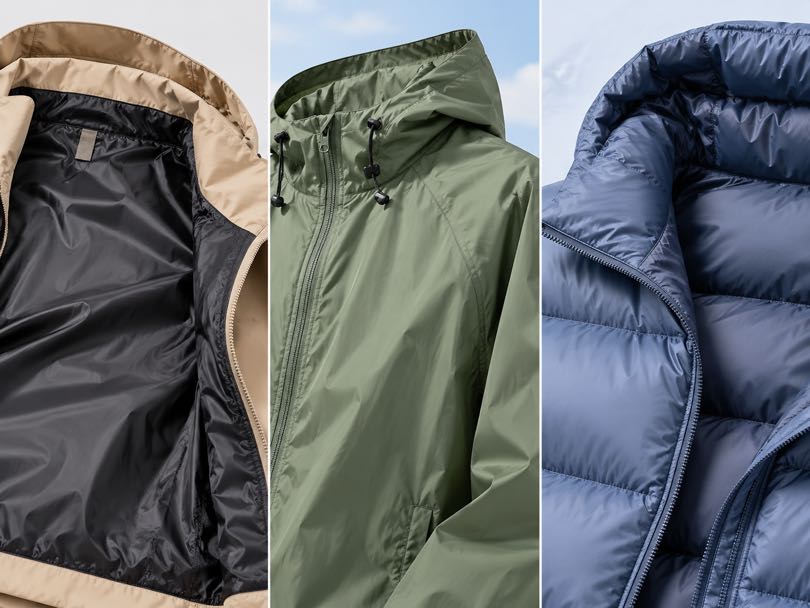
These recommendations reflect our experience supplying polyester and nylon taffeta fabric for linings, jackets, and outdoor apparel. Fabric specifications and finishing treatments can be customized to meet different project requirements.
How to Test Taffeta Fabric Quality
Fabric testing helps confirm whether the selected material meets garment requirements before bulk production. Key tests include fabric weight, dimensional stability, strength, water resistance, and downproof performance.
Fabric Weight and Dimensional Stability
Fabric weight is measured in GSM to verify whether the material meets the specified weight requirements. Dimensional stability testing measures changes in fabric dimensions after washing or other specified treatments, helping assess potential shrinkage problems.
Tear Strength and Tensile Strength
Tear strength testing measures how well a fabric resists tearing, while tensile strength testing measures how much pulling force it can withstand before breaking.
These results help assess whether taffeta meets the durability requirements of lightweight jackets, windbreakers, and other apparel.
Water Repellency and Hydrostatic Pressure
Water repellency can be evaluated through spray testing, such as ISO 4920:2012, while hydrostatic pressure testing under ISO 811 measures resistance to water penetration.
The appropriate test depends on the intended application and required level of water protection.
Downproof Performance and Air Permeability
Downproof testing evaluates how effectively a finished fabric prevents down or feathers from escaping under specified test conditions. Air permeability testing measures the amount of air passing through the fabric.
Both results provide useful information for down jacket development, although low air permeability alone does not guarantee downproof performance.
Real Fabric Test Results: Our Own 210T Polyester Taffeta Data
Our third-party test results for a black 210T polyester taffeta fabric show why fiber composition and dimensional stability are important when choosing lining materials.
Test Property | Test Method | Result |
Fiber Composition | ISO 1833-1:2020 | 100% Polyester |
Lengthwise Dimensional Change | ISO 3759 / ISO 5077 / ISO 6330 | 0% |
Widthwise Dimensional Change | ISO 3759 / ISO 5077 / ISO 6330 | 0% |
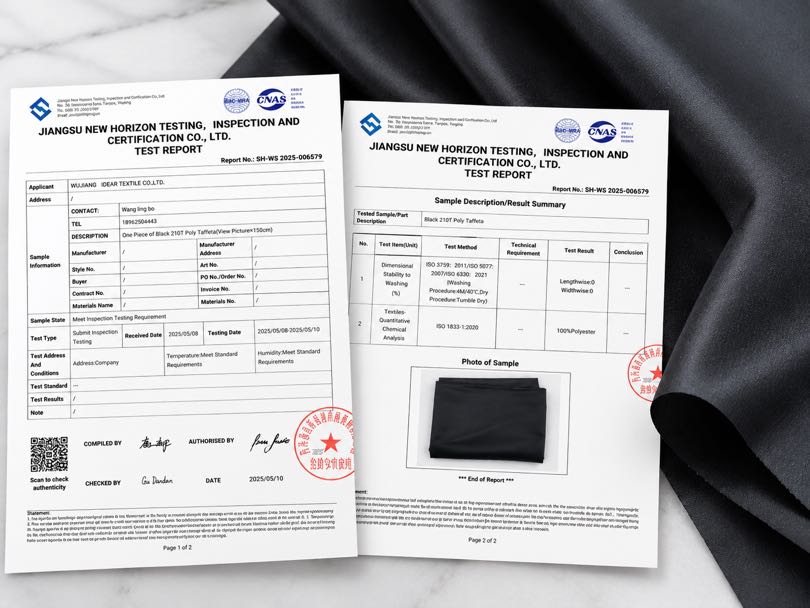
The dimensional stability results were obtained under the specified washing conditions at 40°C, followed by tumble drying.
What Do These Test Results Show?
The test results confirm that the sample is 100% polyester, with no measured dimensional change in either direction under the specified test conditions. However, these results apply only to the tested sample and do not guarantee the same performance for all polyester taffeta fabrics or after repeated washing.
Frequently Asked Questions About Taffeta Fabric
Is Taffeta Fabric Waterproof?
Not always. Standard taffeta is not fully waterproof, but suitable coatings can improve water resistance. Hydrostatic pressure testing helps verify its waterproof performance.
Is Nylon or Polyester Taffeta Better?
Nylon is often considered for lightweight outdoor apparel, while polyester offers a cost-effective option for linings and general outerwear. The best choice depends on the required performance and budget.
Is Taffeta Fabric Breathable?
It can be, depending on its density and finishing. Highly coated or tightly woven constructions may have lower air permeability.
Is Taffeta Fabric Suitable for Down Jackets?
Yes. High-density polyester and nylon taffeta are commonly considered for down jackets, but downproof performance should be tested rather than assumed from thread count alone.
Can Taffeta Fabric Be Machine Washed?
Some polyester and nylon taffeta fabrics can be machine washed. However, washing conditions depend on the fabric construction, coatings, and garment design. Always follow the approved care instructions.
Conclusion
The best taffeta fabric is not necessarily the lightest or the one with the highest thread count. Choosing between polyester and nylon requires balancing fabric weight, density, strength, hand feel, and finishing performance.
Before placing bulk orders, confirm the required specifications and testing methods with your supplier. Evaluating the finished fabric can help reduce material selection problems and improve production consistency.
Looking for a Reliable Taffeta Fabric Supplier?
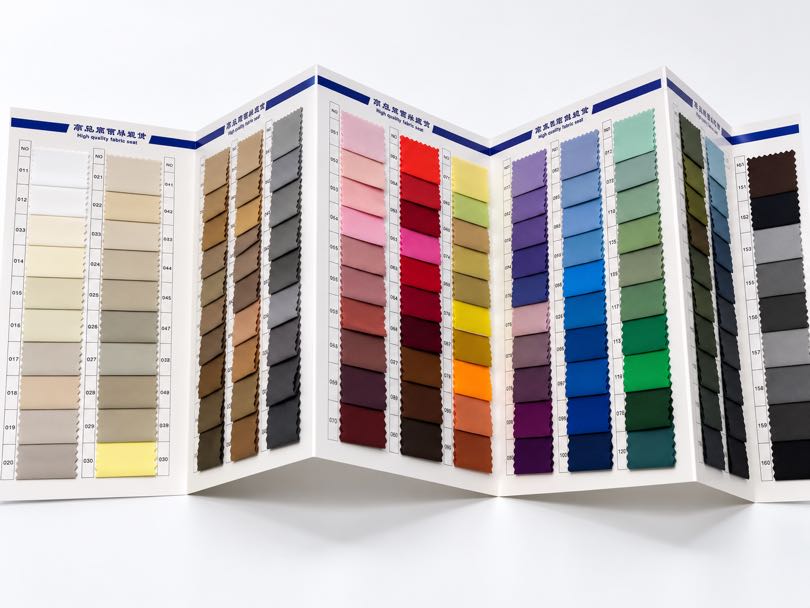
Every apparel project has unique fabric needs. At Idear Textile, we offer polyester and nylon taffeta fabrics with custom specifications and functional finishes.
Whether you need fabrics for jacket linings, lightweight windbreakers, or down jackets, contact us to explore suitable options and request samples for your next collection.